


For many years, New Delhi regarded assignments to Dhaka as prestigious opportunities. Bangladesh served as a key posting for some of India’s top diplomats, many of whom advanced to roles like Foreign Secretary, envoys to prominent countries, or high-level security positions.
The posting was not viewed as a difficult or symbolic assignment for Indian officials. Instead, it functioned as a vital testing ground, according to observers in Bangladesh’s policy community.
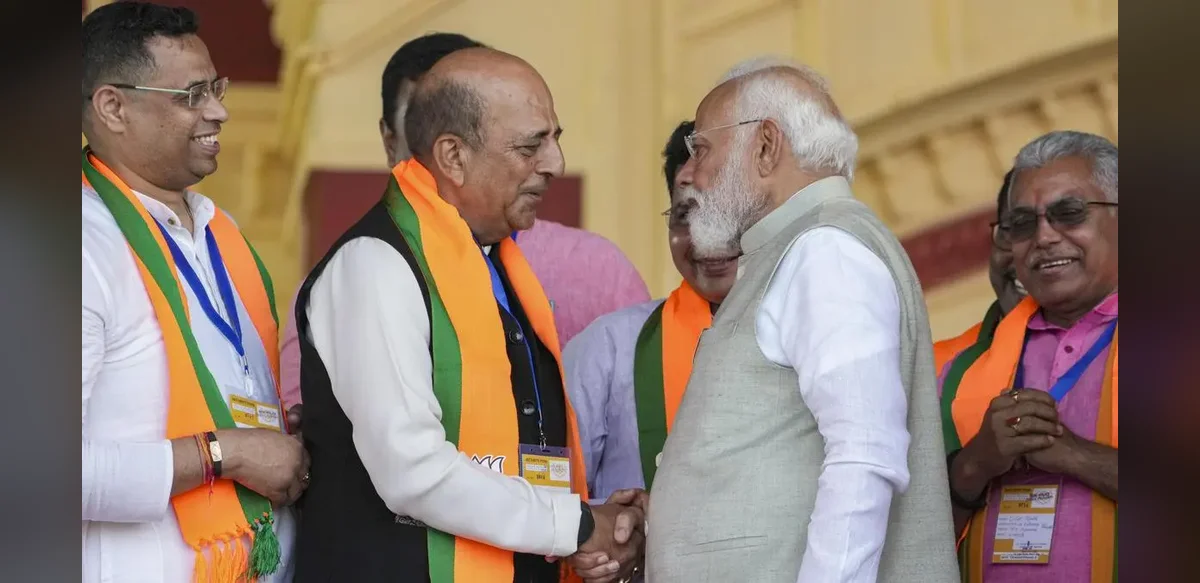
This context makes the rumored selection of Dinesh Trivedi as India’s upcoming representative to Bangladesh significant. Trivedi brings over 30 years of experience in active politics across several major Indian parties. He switched to the BJP in 2021 following a lengthy period with the All India Trinamool Congress, where he was once a key ally of Mamata Banerjee before their public fallout. Previously, he was involved with the Janata Dal and the Congress.
He held seats in both chambers of Parliament, serving as a Lok Sabha member from Barrackpore between 2009 and 2019, and in various Rajya Sabha terms. During his time as Railway Minister from 2011 to 2012, he suggested increasing fares to fund safety improvements and upgrades—a decision that was financially prudent but politically damaging, resulting in a break with Mamata Banerjee and his subsequent resignation.
In Bangladesh’s policy and diplomatic communities, this choice is seen as more than a routine personnel decision. It indicates that India may now consider relations with Bangladesh to be highly political, unpredictable, and strategically sensitive, beyond the scope of standard diplomatic practices. Nations, particularly regional powers, typically do not alter effective approaches without cause.
India’s previous strategy toward Bangladesh was effective but limited. It depended significantly on strong connections with former Prime Minister Sheikh Hasina and her administration. This partnership delivered benefits for New Delhi, such as collaboration on security against rebel groups in India’s northeast, access to transit and connectivity, utilization of Bangladeshi ports, energy exchanges, and a generally secure eastern border.
Relative to India’s more challenging regional ties, Bangladesh appeared as a positive example. However, successful strategies can lead to complacency in planning.
The 2024 unrest in Bangladesh revealed the shortcomings of a policy centered on one political figure. As that system faltered, India seemed overly committed to a single regime and ill-equipped for a more diverse and dynamic Bangladesh.
Doubts about India’s intentions grew, especially among younger Bangladeshis who lack the historical perspective of 1971 and are less inclined to accept a dominant neighbor dynamic.
This shifts the diplomatic landscape for New Delhi. The focus may no longer be solely on cooperating with Dhaka’s government but on rebuilding trust with Bangladeshi society, political groups outside the main faction, and a younger demographic that prioritizes independence more strongly.
Professional diplomats excel in maintaining stability. They oversee departments, sustain communications, draft agreements, and prevent conflicts from escalating. They are less commonly used when political situations become unstable, authority diminishes, and perceptions require adjustment.
An experienced politician provides different skills: understanding of rival groups, ease with uncertainty, expertise in unofficial negotiations, and the capacity to anticipate emerging power dynamics before they formalize.
Thus, Trivedi might function more as a political operative than a traditional diplomat, which is how the potential appointment is largely interpreted in Dhaka.
His background is telling. He has navigated multiple parties, endured coalition dynamics, and operated in the intense political environment of West Bengal, where issues of language, identity, and discontent are routine. He is said to speak Bengali and grasp the nuances of Bengal’s political culture. In international relations, linguistic ability is valuable, but political insight is even more so.
This is relevant because India’s approach to Bangladesh extends beyond foreign affairs; it intersects with domestic politics. Agreements on water sharing rely heavily on input from Kolkata. Discussions about migration influence elections in border areas. Matters like smuggling, border incidents, and religious frictions rapidly turn into internal political debates in India. An envoy who overlooks West Bengal cannot fully comprehend India-Bangladesh dynamics.
Trivedi’s experience could therefore prove beneficial not only in Dhaka but also in navigating the interactions among Delhi, Kolkata, and Dhaka, which frequently decide the feasibility of bilateral advancements.
Another potential reason involves centralization. When critical matters grow complex, leaders sometimes sidestep institutions and appoint reliable political figures. The United States assigns prominent diplomats, Britain occasionally deploys influential individuals, and India might be adopting a similar tactic. This would signal that Bangladesh is now too crucial to manage exclusively through the standard foreign affairs structure.
If Dhaka’s officials think Trivedi has direct access to

