


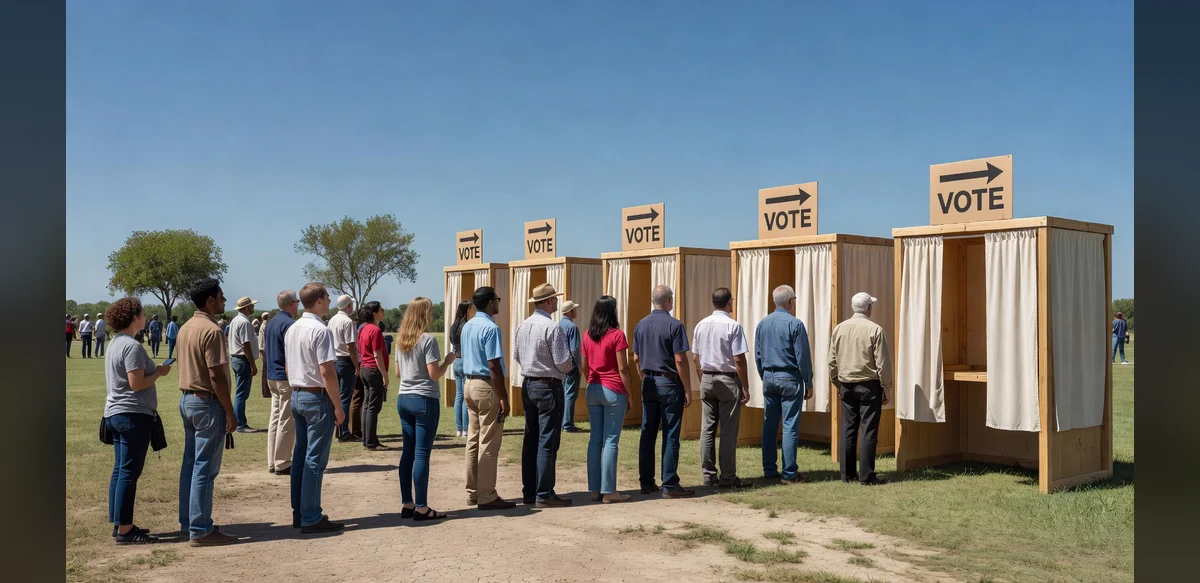
India’s ongoing election cycle has drawn widespread interest, with assembly polls in Assam, Kerala, Puducherry, Tamil Nadu, and West Bengal, plus by-elections in eight seats across Goa, Gujarat, Karnataka, Maharashtra, Nagaland, and Tripura, set for April. Results are due on May 4, a Monday.
As with previous elections, this round features disputes, discussions, claims, and demonstrations. Yet, a standout feature is the exceptional voter participation, particularly in Tamil Nadu and West Bengal. India’s Election Commission praised these states for achieving the greatest voting rates since independence and commended all participants, calling it a milestone for the nation’s democracy.
Data from the Election Commission shows Tamil Nadu at 84.69% and West Bengal’s first phase at 91.78%, marking all-time highs.
This surge followed a major Special Intensive Revision effort to verify voter lists by removing invalid entries like those of deceased individuals, relocated people, or false records, strengthening electoral integrity.
High Participation Across Regions from West Bengal to Puducherry
Polling in Tamil Nadu and West Bengal began at 7 a.m. on April 23, a Thursday, with enhanced support for voters and strict monitoring. Tamil Nadu reached 84.69% by 5 p.m., topping its prior record of 78.29% from 2011.
Breakdown by gender showed stronger involvement from women at 85.76% versus 83.57% for men, continuing the pattern of increasing female engagement and a notable rise from past votes.
Historically, Tamil Nadu’s turnout varied, staying moderate in the 1950s and 1960s before climbing in later decades. The 2026 figures represent the peak of civic engagement in the state.
West Bengal’s initial phase hit 91.78% by 5 p.m., exceeding its 2011 high of 84.72%. Women led with 92.69%, compared to 90.92% for men, highlighting a broader pattern of elevated female participation.
The state has long shown strong voting rates, often among India’s highest. Turnout grew from around 50% in early post-independence years to over 80% in the 1980s and 1990s, a level sustained since. This phase reflects both ongoing trends and a significant increase in enthusiasm. The second phase, on April 29, a Wednesday, is anticipated to set further records based on this momentum.
Elections in Assam, Kerala, and Puducherry on April 9 also saw impressive numbers: Assam at 85.38%, Puducherry at 89.83% (its highest), and Kerala at 78.03%. These beat previous benchmarks—Assam’s 84.67% in 2016, Puducherry’s 86.19% in 2011, and Kerala’s 77.35% in 2016 and 74.06% in 2021 amid the pandemic. Female turnout was highest in these areas: 85.96% in Assam, 80.86% in Kerala, and 91.33% in Puducherry.
Reasons for the Exceptional Figures
This remarkable increase stems from various elements, including public eagerness to join in democracy, the extensive revision of voter rolls nationwide, political pressures or fears, and efforts to secure questionable residencies.
Recently, online videos highlighted the sudden disappearance of domestic workers in Gurgaon and the Delhi-NCR area. Interviews revealed most were from West Bengal, with accents suggesting some might be Bangladeshi Bengalis. A second pattern emerged that

