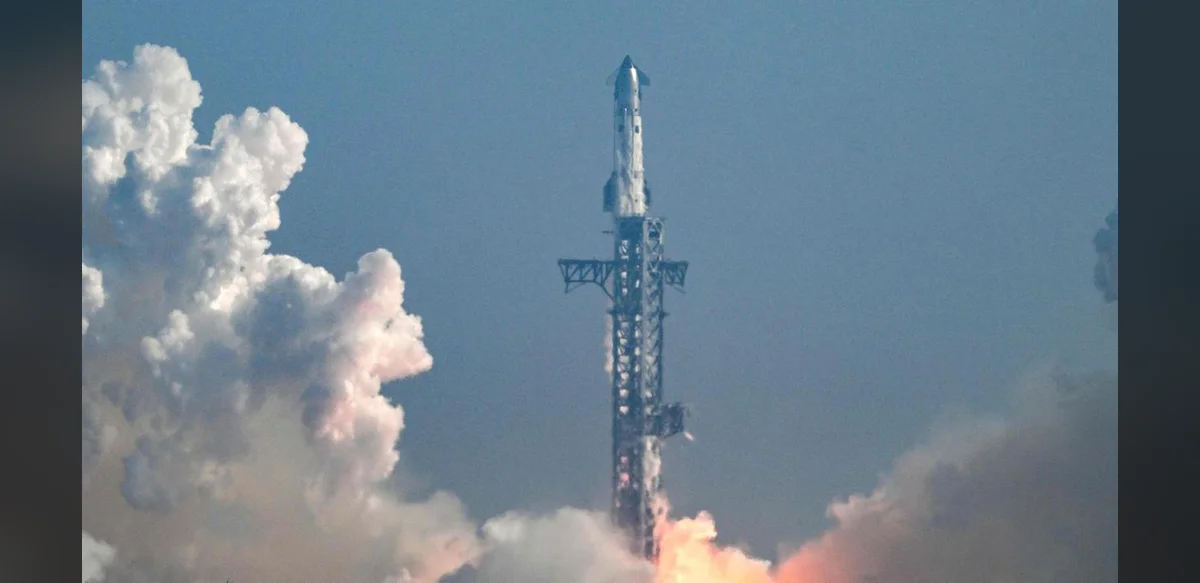
SpaceX carried out a test launch of its largest and most powerful Starship rocket on Friday, May 22, 2026. The upgraded vehicle is intended to support NASA plans for crewed lunar landings. The new version debuted two days after the company announced plans to go public. Liftoff occurred from southern Texas, with the rocket carrying 20 dummy Starlink satellites for deployment on the opposite side of the planet. This marked the 12th test flight of the vehicle designed ultimately for Mars missions, though lunar operations under NASA’s Artemis program come first. The previous Starship model flew in October. The third-generation version, known as V3, departed from a new pad at Starbase near the Mexican border after a launch attempt the prior evening was delayed by technical issues. The company sought to prevent explosions that occurred in earlier flights, which scattered debris over the Atlantic Ocean. The current model measures 124 meters tall, exceeds prior versions in size, and delivers greater thrust. Its booster features fewer but larger grid fins for guidance during return, along with an enlarged fuel line comparable in scale to a Falcon 9 booster. The stainless-steel upper stage includes additional cameras, enhanced navigation systems, greater computing capacity, and docking hardware for future missions. Although Starship is designed for full reusability with mechanical arms to capture stages, this flight involved no recovery. The booster was set to end in the Gulf of Mexico and the upper stage in the Indian Ocean. NASA has awarded SpaceX billions of dollars, along with Blue Origin, to develop lunar landers for Artemis missions. Both firms aim to be the first ready. Starship has reached space briefly on prior flights, while Blue Origin’s lander remains grounded ahead of a planned lunar test later this year. NASA completed a crewed lunar flyby in April and plans an orbital docking test next year for Artemis III. A crewed landing under Artemis IV could occur by 2028 using the first ready lander. This would mark the first American crewed moon landing since 1972, with the aim of establishing a base near the south pole involving both astronauts and robotic systems. SpaceX has begun accepting bookings for private lunar and Mars trips. California businessman Dennis Tito and his wife reserved a lunar flyby three and a half years ago, though the schedule remains unclear. Separately, investor Chun Wang announced plans to join an early Mars flight, having previously participated in a polar orbit mission aboard a Dragon capsule.