


The adult human body contains roughly 30 trillion cells, all originating from about 100 stem cells during early development. These embryonic stem cells can become any cell type and are described as pluripotent, a property now applied in scientific and medical research.
Research with human embryonic stem cells started in 1998 using embryos donated by couples undergoing in vitro fertilization. These donations allowed creation of large supplies of pluripotent cells that remain in use in laboratories nearly three decades later.
In 2007, teams led by Shinya Yamanaka in Japan and James Thomson in the United States reported methods to reprogram adult cells such as skin cells back into a pluripotent state. The resulting induced pluripotent stem cells carry the donor’s own genetic material, supporting personalized disease studies and treatments.
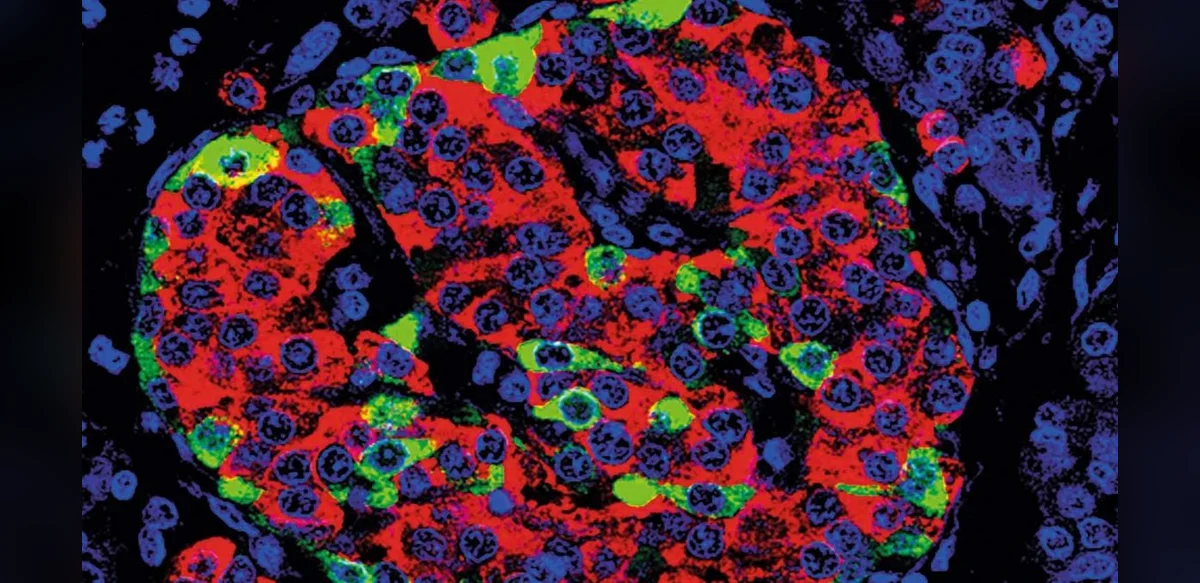
In diabetes research, embryonic stem cells are directed to form insulin-producing beta cells, which are lost in Type 1 diabetes. Without these cells, patients rely on insulin injections that do not fully replicate natural function or ease the daily burden of the condition.
To address this limitation, laboratories produce stem cell-derived beta cells for transplantation. Vertex Pharmaceuticals reported that 10 of 12 treated patients stopped insulin use within six months. A separate Chinese study converted a patient’s fat cells into induced pluripotent stem cells, generated beta cells, and transplanted them; the individual became insulin-independent after 75 days and maintained that status for at least one year.
These results indicate that transplanted cells can survive and function, yet obstacles persist around complete maturation, large-scale safe production, and immune rejection.
Because lab-grown cells differ genetically from the recipient, the immune system may attack them. Using patient-derived induced pluripotent stem cells reduces but does not eliminate this risk, and autoimmune processes in Type 1 diabetes can still destroy the cells. Current immune-suppressing drugs carry significant side effects.
Alternative approaches include protective capsules around transplanted cells and genetic modifications that allow cells to evade immune detection. A 2025 trial demonstrated that gene-edited cells transplanted without immune-suppressing drugs produced no rejection response, survived, released insulin, and improved blood sugar control over 12 weeks.
Stem cells continue to provide versatile tools for research and therapy, with improving methods for creating specialized tissues and initial clinical successes already achieved.

