


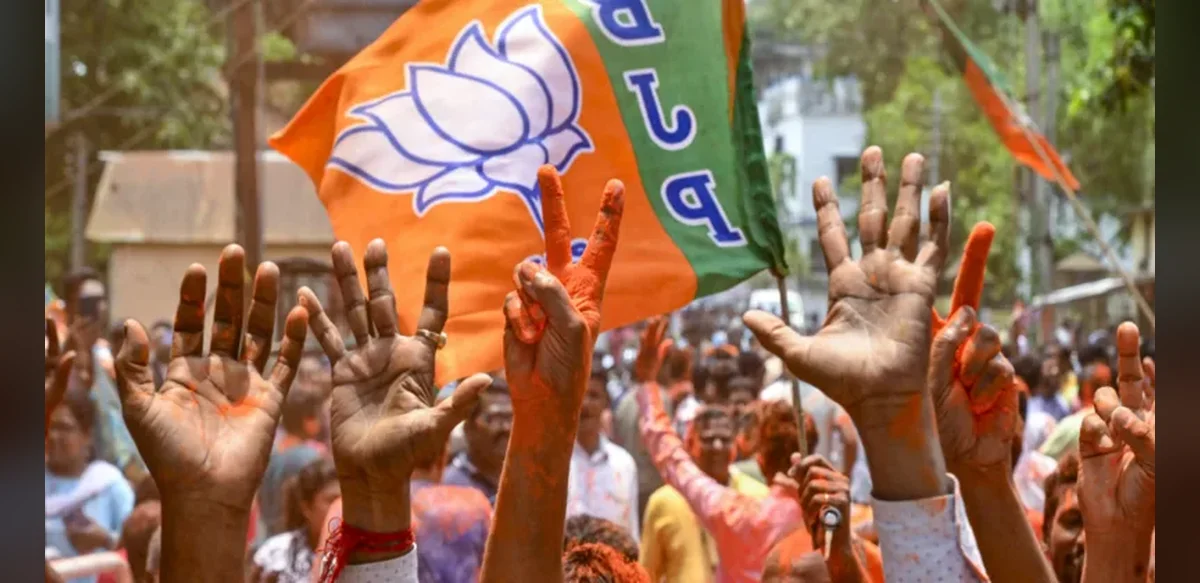
When parts of the Western media cover West Bengal, they often focus less on understanding current conditions and more on defending an older political image of the state. Recent BBC criticism of the Rashtriya Swayamsevak Sangh’s growing role in Bengal follows this pattern.
The suggestion is familiar: rising Hindu social and political activity in Bengal marks a risky shift from the state’s supposed liberal and secular nature. Such views may suit overseas editorial preferences, yet they show only a limited grasp of Bengal’s political changes.
Criticism itself is not the issue. Democracies benefit from examination. The issue is the selective perspective increasingly applied to Bengal.
Many foreign observers still see Bengal as a romantic political ideal — the home of Tagore, left-wing thought, intellectual gatherings and cultural openness. This picture, built over years and repeated often, has become accepted as fact. Below it lies another Bengal shaped by Partition trauma, refugee movements, border concerns, population changes and a long-standing pattern of political violence.
These aspects receive less attention in global reports.
The 1947 Partition changed Bengal’s social structure. Successive migrations from East Pakistan and later Bangladesh altered districts, economies and political concerns. Millions arrived with experiences of persecution and displacement. For many Bengali Hindus, questions of identity and demographic change were direct realities rather than abstract ideas.
Much international commentary still frames Bengal’s politics in simple terms — secularism versus nationalism, liberalism versus majoritarianism — as if local complexities fit outside ideological models.
Bengal’s history of organised political violence also receives less notice. From the Naxalite period through Left Front rule and the rise of the All India Trinamool Congress, violence has stayed part of political life. Post-election clashes and intimidation have appeared in several cycles.
Violence after the 2021 Assembly election prompted National Human Rights Commission observations to the Calcutta High Court about serious democratic concerns in some areas. Reports of attacks on opposition workers and displacement came from multiple districts. Sandeshkhali later revealed allegations of coercion and local impunity under political cover.
These events might be expected to draw strong international attention to democratic standards in Bengal. Instead, much concern centres on RSS growth.
This difference is hard to view as chance.
When Ram Navami processions in Bengal lead to clashes, global media often describe them as cases of Hindu aggression, while giving less weight to preceding local tensions or attacks. Violence tied to other groups is frequently explained in social terms; Hindu mobilisation is more readily labelled majoritarian radicalism.
The pattern is clear. Organised cadre violence often receives softer framing, while Hindu social activity draws stronger warnings. Some identity politics is presented as resistance, others as extremism.
The reason lies less in Bengal and more in assumptions about India common in Western editorial circles. A recurring approach uses postcolonial ideas that treat expressions of Hindu political awareness with caution. This leaves little space to consider that cultural nationalism in Bengal may stem from real social concerns, historical memory and democratic activity rather than outside influence alone.
RSS expansion in Bengal grew through local work, organisational effort and outreach in areas where residents felt politically overlooked. Relief efforts during floods and cyclones played a role.

