


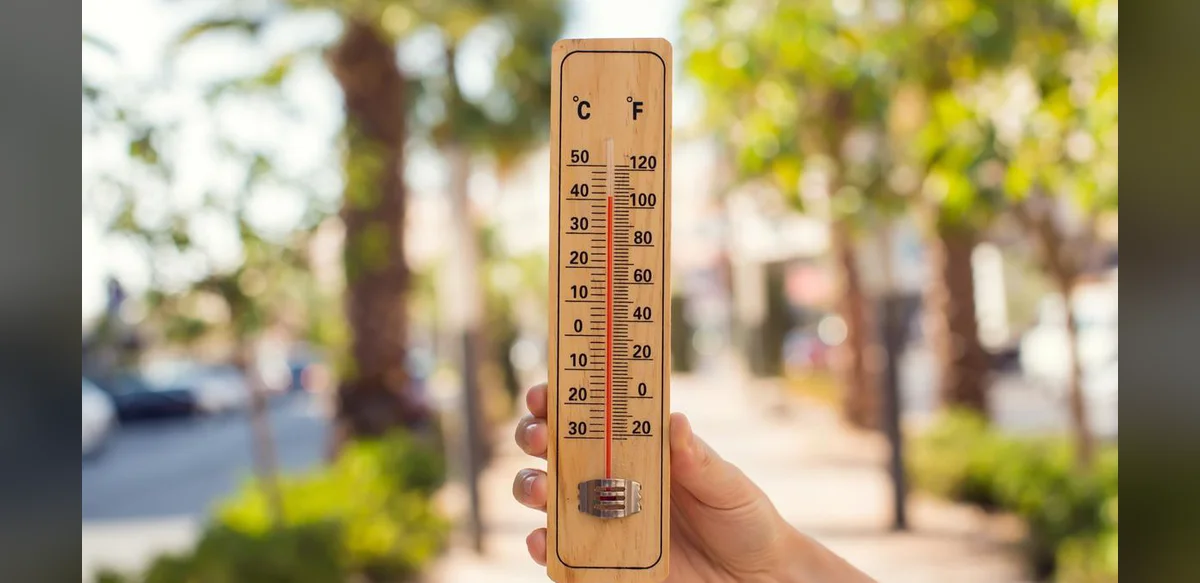
Residents of warm climates have little reason to complain about moderate heat. Recent conversations about daytime temperatures reaching 33 degrees highlight contrasts with hotter regions experiencing 42 degrees, where dry earth and intense sunlight prevail.
Questions often arise about the meaning of a temperature degree and methods of measurement. The Celsius scale, named after Swedish physicist Anders Celsius, serves as the standard unit. Defining zero presents a challenge, as temperature lacks a countable absolute like physical objects.
Water provides the reference point. Temperature reflects molecular activity: heating increases atomic motion while cooling reduces it. Materials cannot be heated or cooled indefinitely without undergoing phase transitions.
Water reaches a freezing point at zero degrees Celsius, changing from liquid to solid. It boils at 100 degrees Celsius, shifting to vapor. These fixed points divide the scale into 100 units. Human body temperature registers at 37 degrees Celsius on this scale. The Fahrenheit scale uses different markers, placing body temperature at 98.6 degrees. In 1948, Celsius became the international standard.
Measurement relies on materials that respond predictably to heat. Mercury, a liquid metal, expands uniformly when warmed because its atoms move farther apart. A glass bulb connected to a narrow tube holds the mercury. Placement in ice marks the zero level. Immersion in boiling water marks the 100 level. Equal divisions between these points create the scale. The device then measures temperature in various substances by observing expansion.
Such mercury thermometers were common until recent years. Digital alternatives have since replaced them as technology advanced alongside rising global temperatures and increased device use.

