


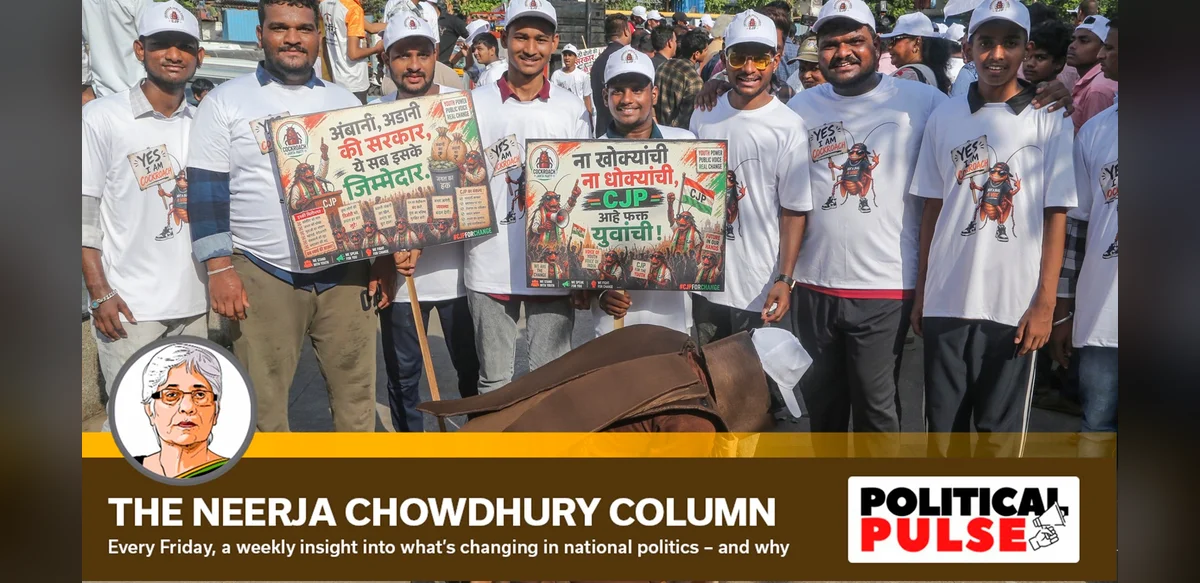
An older resident of Delhi whose family took part in the independence movement said he would never support a group named Cockroach Janta Party. His remark captured the unease of an older generation adjusting to swift changes driven by younger voters.
The individual, a 60-year-old entrepreneur interested in politics, opposed the BJP for reasons similar to those in the CJP manifesto yet refused to back the new group. Within a week the CJP attracted more than 20 million Instagram followers, surpassing accounts built by the BJP and Congress over years. International media also took notice.
Earlier this month actor C Joseph Vijay won power in Tamil Nadu, defeating the DMK while the AIADMK failed to offer a strong alternative. The victory was credited largely to Gen Z and Gen Alpha voters aged 12 to 16 who influenced family choices.
A Tamil Nadu newspaper editor reported that his teenage granddaughter persuaded his wife to vote for Vijay. Similar influence occurred in many households, and many of these young people will cast first votes in five years.
Social media now shapes elections to varying degrees. A rapper became Nepal’s prime minister, and unrest linked to online sentiment contributed to the ouster of Bangladesh’s Sheikh Hasina.
India’s size and diversity make events like those in Nepal or Bangladesh unlikely. Still, the CJP should not be dismissed as foreign interference. Authorities should remain alert to possible external efforts amid shifting global alliances.
The CJP expresses frustration with established parties, as shown in its manifesto and anthem. Its rise after the BJP’s West Bengal win underlines the need for the ruling party to address broader concerns beyond symbolic gestures.
Opposition parties have struggled to appeal to Gen Z. Supporters of the unknown Boston-based Abhijeet Dipke did not turn to accounts of the Congress, AAP, TMC or RJD.
Those parties criticised the NEET-UG paper leak and called for the education minister’s resignation. They also objected to remarks by the Chief Justice of India that used the word cockroach, though he later clarified he targeted individuals with fake credentials, not youth in general.
Many young users show fatigue with existing parties, their language and their limited focus on youth issues. It remains unclear whether the CJP will become a ground movement or register as a party like the AAP.
Dipke claims 94 percent of followers are Indian, though Instagram offers no nationality data. Some may seek entertainment rather than change. The provocative name likely amplified attention.
Social media favours sensational and irreverent content over nuance. The CJP has used satire effectively without personal attacks and has listed five demands, including judicial independence and 50 percent reservation for women in Parliament.
Dipke conceived the satirical platform on May 16 and has faced caste-based criticism online.

