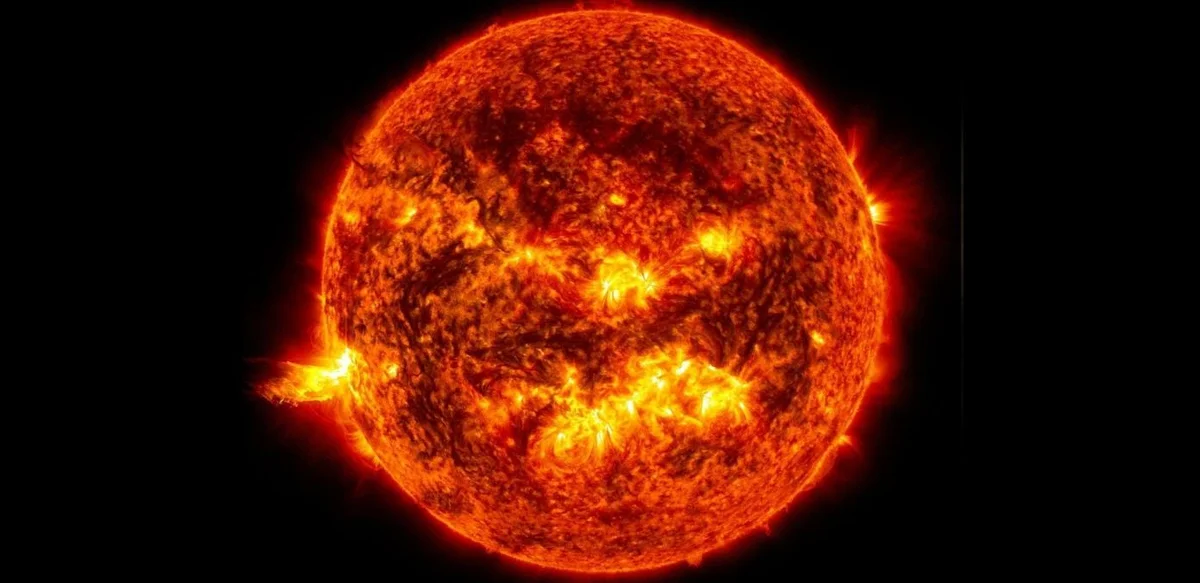
The Sun routinely releases vast amounts of energy and ejects plasma clouds into space, sometimes producing auroras at lower latitudes. In August 2025, an unusually long event began that exceeded prior observations. It involved a Type IV radio burst generated when electrons become trapped in solar magnetic fields. Such bursts normally last hours to days and can accompany particle storms that threaten satellites. This instance continued for 19 days, nearly four times the previous maximum of five days. Data from NASA’s STEREO, Parker Solar Probe, and Wind missions, plus the ESA-NASA Solar Orbiter, were combined to track the full duration. The Sun’s rotation brought the source region into view of each probe sequentially. Analysis traced the emission to a helmet streamer, a large magnetic feature in the corona reinforced by three successive coronal mass ejections. These findings aid space weather prediction by clarifying how certain magnetic structures sustain prolonged activity. The study appeared in The Astrophysical Journal Letters.