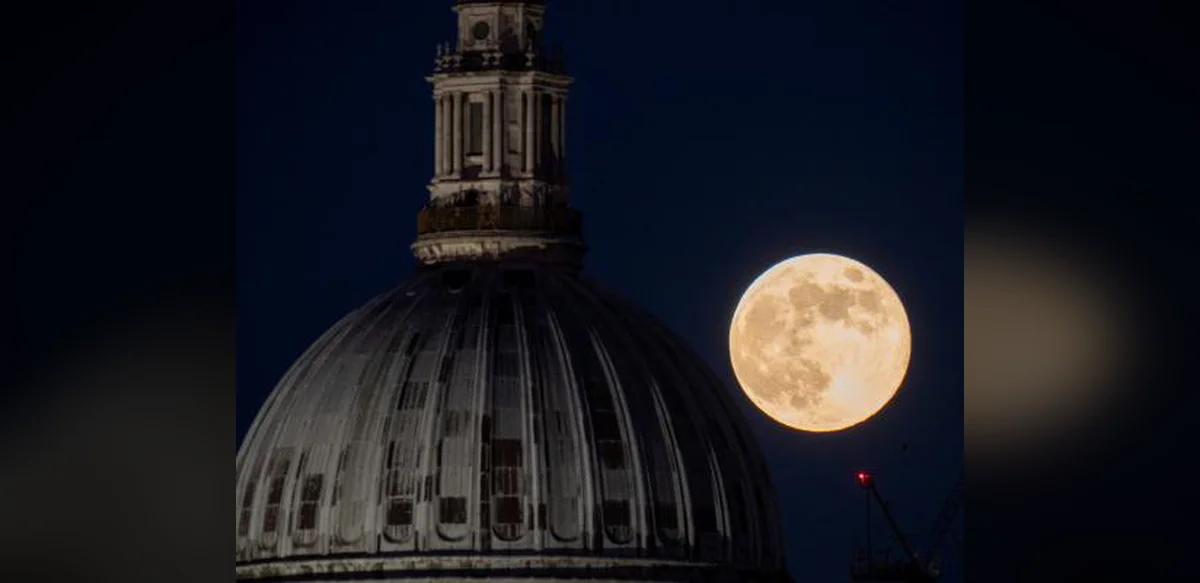
This weekend the night sky offers a rare sight known as a blue micromoon. Astronomer Dr Greg Brown from the Royal Observatory Greenwich explains the terms involved. A monthly blue moon occurs when a second full moon appears in the same calendar month. The lunar cycle lasts about 29.5 days, so two full moons in one month are uncommon. A seasonal blue moon refers to the third full moon in an astronomical season that contains four instead of the usual three. A micromoon happens when a full moon occurs near the moon’s farthest point from Earth in its elliptical orbit. It appears roughly 6 percent smaller than an average full moon and 14 percent smaller than a supermoon. Blue moons take place every few years while micromoons occur two or three times annually, making their combination infrequent, roughly once every couple of decades. The next such event visible in the UK is expected in 2066, though parts of the United States may see one in 2053. The moon will not appear blue unless atmospheric dust from fires or eruptions creates a bluish tint. The full moon peaks at 9:45 a.m. BST on 31 May, after moonset in the UK, but it will look essentially full on the preceding and following nights. Viewers should look on Saturday or Sunday evening. In the northern hemisphere the moon stays relatively low, while in the southern hemisphere it appears high overhead.