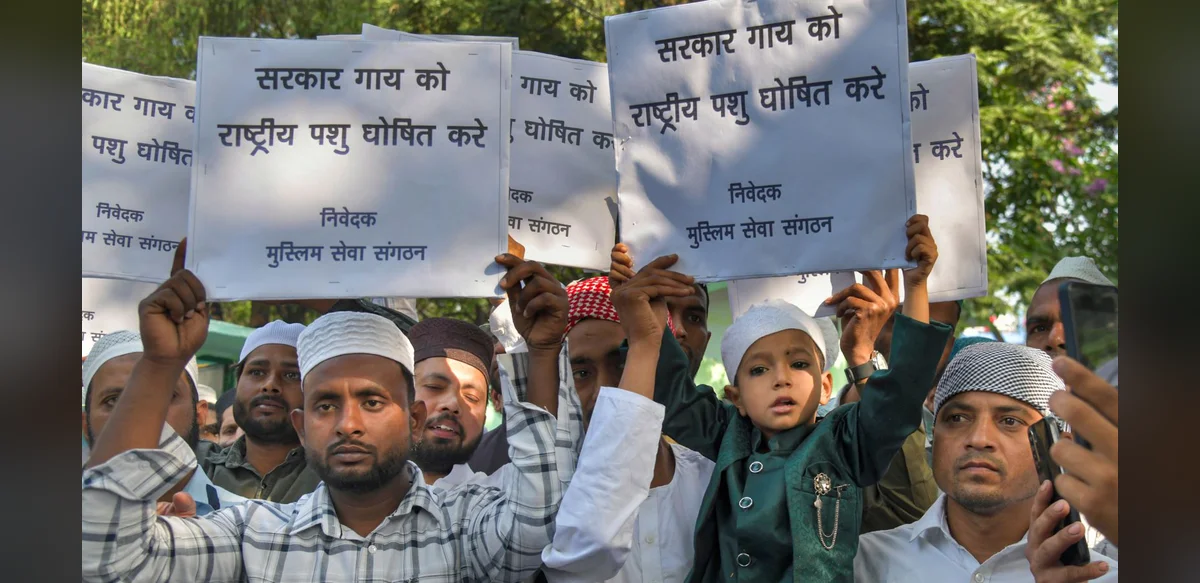
The cow slaughter issue returned to headlines after the Suvendu Adhikari-led BJP government in West Bengal began strict enforcement of the Animal Slaughter Control Act, 1950. Under the law, only cattle older than 14 years may be slaughtered following certification by local officials and government veterinary surgeons. Ahead of Bakrid on May 28, Jamiat Ulama-i-Hind chief Maulana Arshad Madani and Ajmer Sharif cleric Syed Sarwar Chishti urged the Centre to declare the cow the national animal due to its religious importance for Hindus. Former Vice President Hamid Ansari supported the call, stating it could help preserve peace and prevent communal conflict. The topic has repeatedly sparked Hindu-Muslim tensions over more than a century. Historical records show some Muslims also opposed cow slaughter, including Mughal emperor Akbar. During the 1857 Revolt and the 1919 Khilafat movement, Muslims voluntarily halted the practice as a goodwill gesture. Scholars have examined why the issue became so divisive. Sociologist Therese O’Toole noted that cow protection united Hindu orthodoxy and reformers. John Zavos argued it enabled broad Hindu consolidation without altering caste structures. Historian Gyanendra Pandey linked it to definitions of Hindu identity that appealed to backward castes. Sandria Freitag observed it reassured upper-caste landlords of peasant loyalty. Anthropologist Peter Van der Veer described the cow as symbolising family and community under patriarchal authority. Kenneth Jones highlighted how competing Hindu and Muslim newspapers amplified the issue. Bipan Chandra noted cow protectors targeted Muslims rather than beef consumption in military areas. Mahatma Gandhi distinguished between cow protection and service, advocating persuasion over confrontation. He argued in Hind Swaraj and Young India that harming others to save cows contradicted Hindu principles. Gandhi attempted mediation in 1927 on music before mosques and beef eating but supported legal bans if backed by majority opinion. Numerous riots and press debates occurred in colonial India. The Constituent Assembly later addressed cow slaughter through members including Thakurdas Bhargava.