


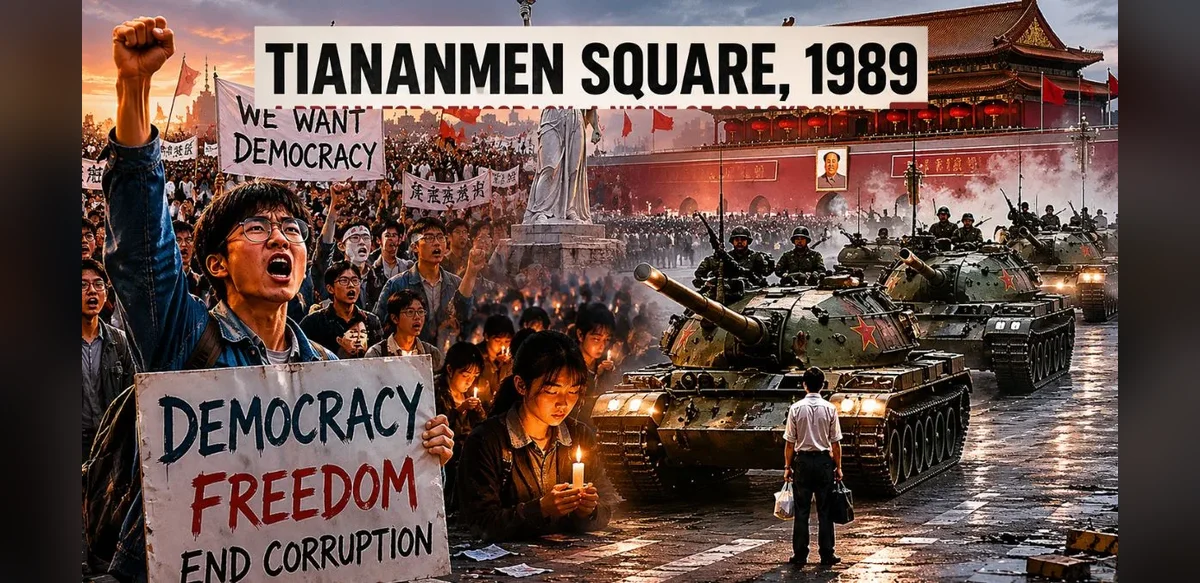
Thirty-five years later, the events in Beijing’s central square remain a significant historical moment. On the night of June 3, 1989, authorities confronted demonstrators with force rather than negotiation. The incident shaped public memory and state policy for decades afterward.
In spring 1989, Tiananmen Square became the center of student-led demonstrations that began as mourning for former leader Hu Yaobang. The gatherings expanded into calls for reduced corruption, greater press freedom, and political reforms. The protests grew to include workers, academics, and some party members, reaching up to one million participants on peak days.
The square, bordered by the Great Hall of the People and the Monument to the People’s Heroes, held symbolic importance as the site of national ceremonies since 1949. Demonstrators erected a statue representing democracy and maintained nonviolent conduct with organized stages and banners.
International coverage showed unarmed civilians facing troops. The government ultimately deployed armored units and live ammunition, resulting in numerous casualties. Official accounts have remained limited, with ongoing restrictions on discussion.
The demonstrations followed economic changes introduced after 1976 that combined market elements with continued one-party control. Rising costs and uneven growth contributed to public discontent among younger citizens.
Within the leadership, opinions differed on handling the protests. The decision to impose martial law prevailed, leading to the military advance into Beijing streets on June 3.

