


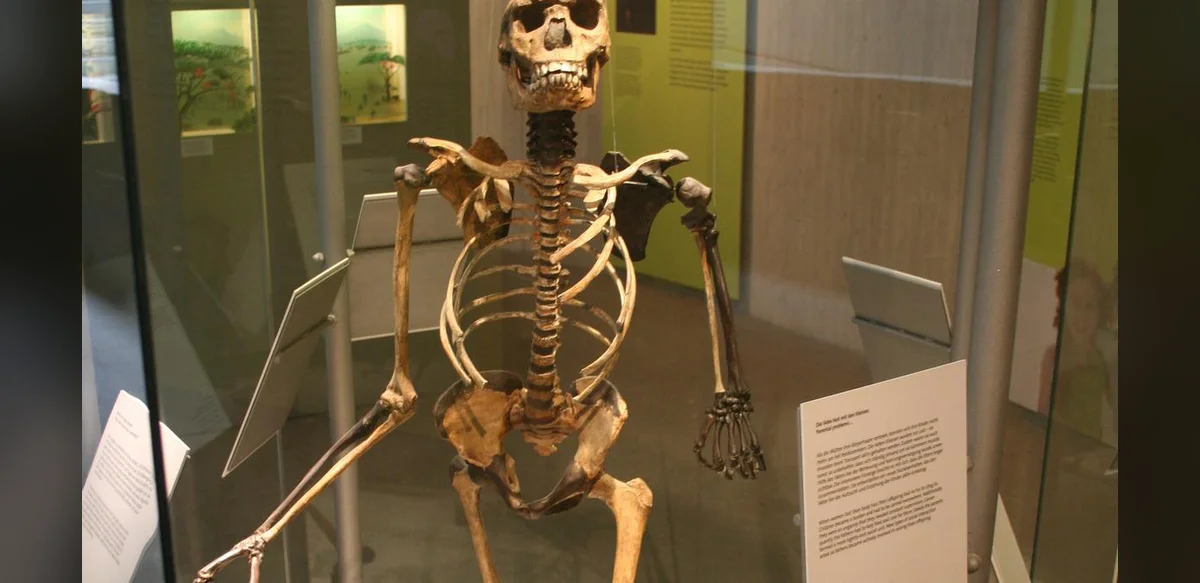
For much of modern history, human evolution was viewed as a straight sequence in which one species succeeded another. The familiar illustration of an ape gradually becoming an upright person reflects this view.
That understanding shifted in the late nineteenth century as researchers uncovered human-like fossils. Age estimates then relied on geological context such as burial depth and surrounding rock layers. These clues showed relative order but gave no exact dates.
The emerging sequence hinted that various human types had lived at the same time rather than in strict succession. Later radiometric methods confirmed the pattern: several human species overlapped on Earth at different periods.
Series of surprises
In 2003 the Human Genome Project delivered the first detailed human genome sequence, offering what seemed to be the key to human uniqueness. That certainty faded quickly.
In 2010 researchers published the Neanderthal genome. Comparisons with present-day people showed that most individuals outside Africa carry 1-2 percent Neanderthal DNA, while Africans retain 0.3-0.5 percent.
Further surprises followed. The 2012 Denisovan genome revealed that some groups in Oceania and Southeast Asia carry 3-6 percent Denisovan DNA.
These findings raised the possibility that modern humans might also retain genetic traces from other extinct relatives. Yet fourteen years after the Denisovan sequence, no additional genomes from other extinct human species had been obtained.
DNA after death
DNA degrades rapidly after death. Cellular enzymes fragment it, microbes consume it, and water, oxygen, temperature swings, and radiation cause further damage. Within tens of thousands of years only tiny fragments remain.
Recovering usable DNA therefore requires rare conditions such as permafrost or stable cave interiors. This explains why few fossils yield genetic material.
One long-sought species is Homo erectus, which appeared more than two million years ago and spread across Africa, Europe, and Asia.
Acid etching
A recent Nature study reports the first molecular sequences from Chinese Homo erectus fossils. Instead of extracting DNA, scientists recovered proteins from the enamel of six teeth dated to about 400,000 years ago. Protein sequences reflect portions of the original genetic code.
The recovery method is noteworthy. Traditional approaches require grinding fossil material, which curators often resist. Here, researchers applied dilute acid briefly to a small enamel area, releasing proteins while leaving the tooth almost whole. Enamel’s mineral structure preserves proteins for extended periods.
Proteins were obtained from five male and one female individual. Comparisons with modern humans, Neanderthals, and Denisovans yielded two findings: all six specimens carried a protein variant unknown in other Homo species, and another variant shared with Denisovans, suggesting possible interbreeding in East Asia.
Shared story
However, because the proteins supply only limited sequence data, broader conclusions remain tentative.

