


The central government has rebutted environmental concerns over the 81,000 crore Great Nicobar Project. Defence Ministry sources attributed the criticism to limited geographical awareness and stressed that the initiative serves long-term strategic objectives for India.
The clarification follows a visit by Congress leader Rahul Gandhi to the island, during which he voiced worries raised by activists about risks to local wildlife and marine habitats.
The site lies roughly 40 km from the Six Degree Channel, adjacent to the Malacca Strait, a vital global shipping passage. Officials described the effort as a national security project rather than a commercial venture, intended to reinforce India’s role in the eastern Indian Ocean.
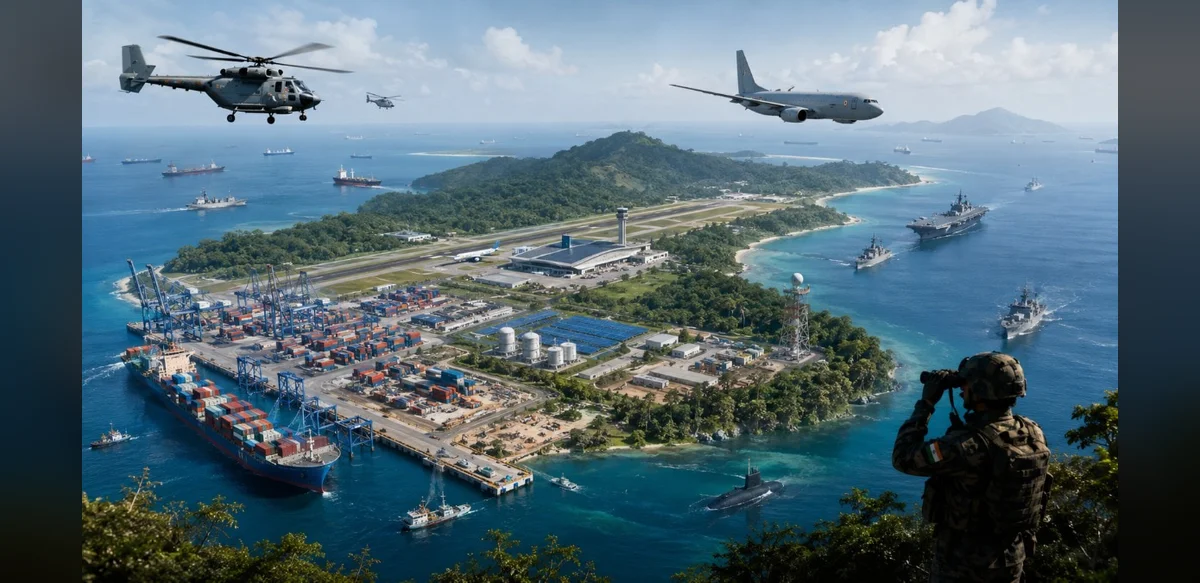
Defence officials indicated the plan covers military infrastructure plus airports, power plants, logistics hubs, townships and maritime facilities to maintain a lasting presence. They said development should have occurred earlier and would improve security, cut reliance on foreign ports and create more than one lakh jobs.
A new greenfield airport under navy control would boost maritime surveillance, reach, logistics and disaster response. Officials rejected expanding INS Baaz, noting that multiple locations were reviewed and Galathea Bay offered lower environmental impact plus room for growth.
Expanding the existing base would have required more hill cutting, dredging and reclamation, causing greater ecological harm, they added.
Officials said more than 81 per cent of the island will remain as forests, national parks, biosphere reserves and tribal areas. Only 166 sq km is set for development, with over half the diverted forest land staying green and free of tree felling.
A 2,200 crore conservation programme lasting 30 years forms part of the project to protect wildlife, coral reefs, mangroves, turtles and other species. No tribal communities will face physical displacement, and notified tribal reserve areas are expected to grow after fresh notifications.
The project has completed environmental assessments, and the National Green Tribunal did not alter the clearances granted.

