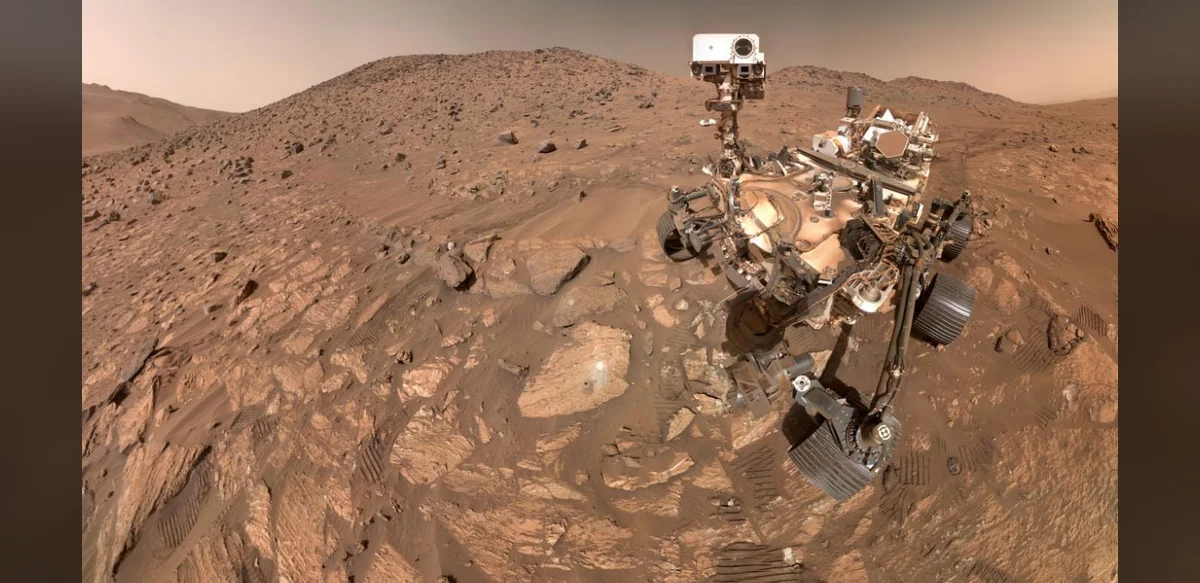
NASA’s Perseverance rover may bring scientists closer to determining whether life exists beyond Earth. Robotic missions have searched Mars for signs of past life since the 1970s. Since 2021, Perseverance has explored Jezero Crater, the location of an ancient lake and river delta formed about 3.7 billion years ago. Researchers used the SHERLOC instrument to study carbon compounds in rocks at the Bright Angel outcrop. They identified macromolecular carbon in the Cheyava Falls rock, the shallowest such detection on the Martian surface. The compounds appear relatively recent or protected by minerals. These findings add to other materials like carbonates and phosphates that could support life’s building blocks. Similar organic-bearing rocks found far from Gale Crater suggest conditions for life may have been widespread on early Mars. The carbon appears more complex than previously detected molecules. Spectral analysis indicates it is amorphous carbon, similar to both biological and non-biological samples on Earth. However, current methods cannot confirm a specific origin. Researchers note that organic matter alone does not prove biological activity, and the rover cannot distinguish between biotic and abiotic sources. Possible origins include delivery by meteorites or formation through volcanic or hydrothermal processes. A future sample return mission would allow detailed Earth-based analysis to identify the source.