


This article has been reviewed according to Science X’s editorial process and policies. Editors have highlighted the following attributes while ensuring the content’s credibility:
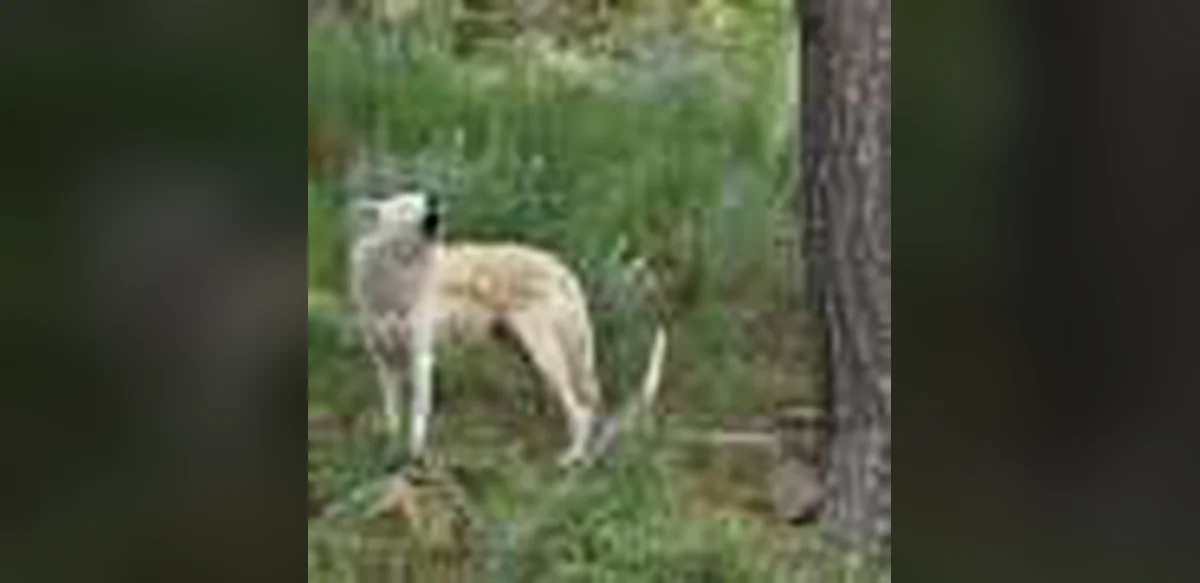
A gray wolf at a sanctuary in southern Colorado. Gray wolves remain endangered in most of the continental United States, especially the Mexican wolf subspecies which suffers from genetic bottlenecking. Credit: Jenny Thompson
Throughout human ecological history, people have played various roles within ecosystems around the world. In the current Anthropocene era, genomic innovations have given new and powerful ways to influence the environment and the many species sharing the planet.
In two new publications, researchers call on scientific colleagues and society to approach these tools with ethical deliberation, in consultation with Indigenous peoples and with the goal of supporting ecosystems holistically.
Both publications were collaborative efforts advancing the goals of the Center for Indigenous Science at the Carl R. Woese Institute for Genomic Biology at the University of Illinois Urbana-Champaign.
The first, published in Ethnobiology Letters, focused on strategic and ethical considerations of species de-extinction using genomic technologies. The second, in Conservation Biology, explored broader concerns related to nonhuman genomic data use in conservation.
The Center for Indigenous Science promotes ways to do science that extend beyond typical academic systems, specifically to Indigenous science systems, said Alida de Flamingh, a postdoctoral scholar. This research promotes Indigenous data sovereignty, as well as access and benefit sharing.
In the Conservation Biology publication, de Flamingh and co-authors discussed the importance of collaboration among Indigenous communities and conservation research groups. They contrasted ethical guidelines for human genome research involving Indigenous communities with the absence of similar frameworks for nonhuman genome research.
There is already foundational work by Indigenous scholars that informs how to think about genomes in a culturally grounded way, de Flamingh said. That informed thinking and represents a large aspect of research using ancient DNA on nonhuman organisms.
The co-authors consider biobanking, an emerging practice involving collecting and storing biological samples or genomic data from organisms to allow study and enable future restoration efforts.
As technologies have emerged to rapidly sequence, analyze and use DNA sequences, a societal consensus on responsible use has not kept pace.
To ground nonhuman biobanking practices, the researchers recommend extending principles of respecting Indigenous data sovereignty and ensuring access and benefit sharing established for human genomic research. Indigenous groups hold valuable knowledge about culturally and ecologically important species that could be prioritized for biobanking.
People are not often considering what constitutes a culturally significant species or thinking about organisms as part of a relational system, de Flamingh said. Relationality is a concept often discussed and forms part of Indigenous thinking about existence.
The importance of a more holistic view of ecosystems in conservation was also emphasized in the Ethnobiology Letters article. Lead author August Hoffman and colleagues considered last year’s announcement by a biotechnology company that it had resurrected the extinct dire wolf species through genomic data and gene-editing technology.

