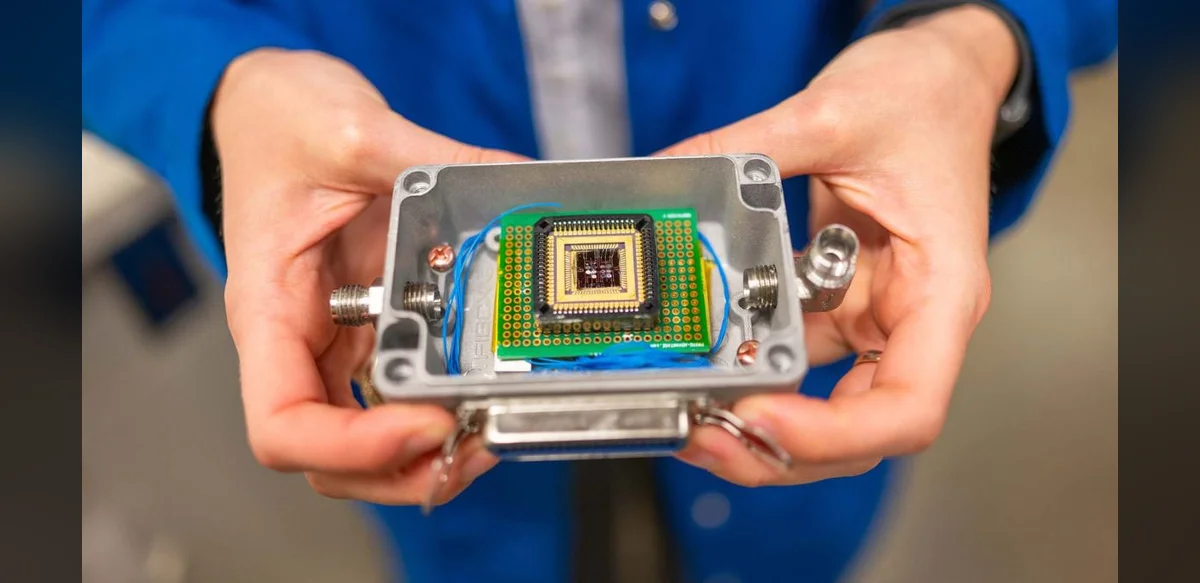
Many people experience stomach upset after eating questionable food, but food-borne illnesses represent a serious global issue. The World Health Organization estimates that over 850 million people become ill annually from contaminated foods, leading to more than 1.5 million deaths each year. Despite advances in technology, checking food freshness often relies on a simple sniff test, which is unreliable. Engineers at the University of California Berkeley have created an electronic nose with 16 sensors that detect gases from spoiled food or allergens. This device could be integrated into appliances like smart refrigerators to alert users about items nearing spoilage. The sensors function like digital taste buds by converting chemical reactions into electrical signals. Using machine learning, the system identifies 16 food products with nearly 93 percent accuracy, including fruits, nuts, chicken, milk, and eggs. It operates at room temperature with carbon nanotube semiconductors and a simple manufacturing process. The technology may also help identify allergens, potentially reducing emergency visits. Further testing is needed for complex scenarios, and a portable version linked to a smartphone app is in development. Challenges remain regarding cost and use in areas with limited resources.