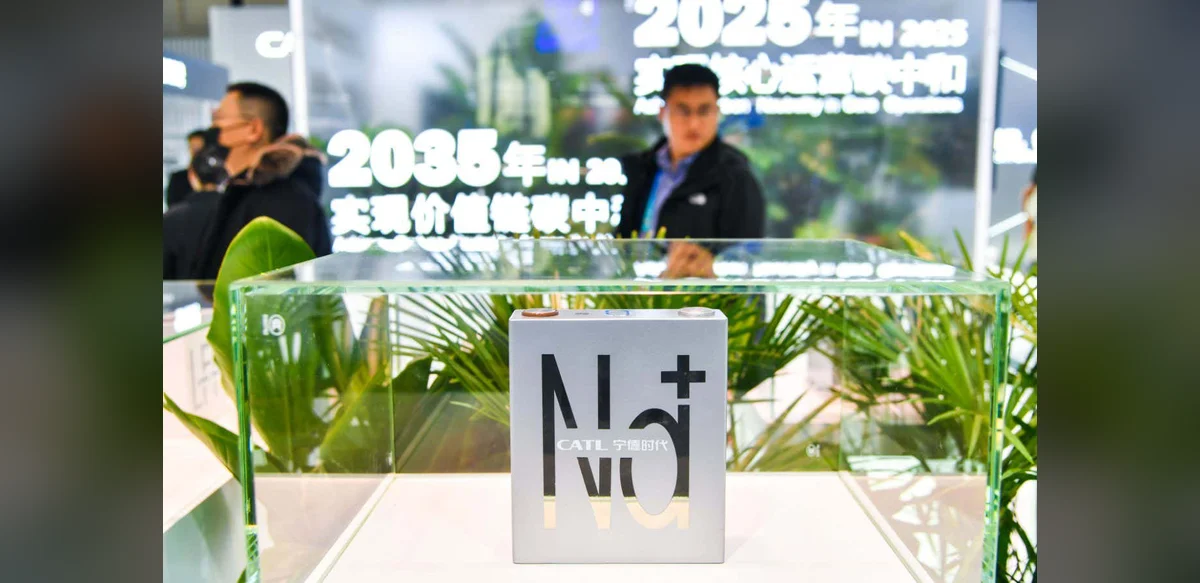
Most rechargeable batteries today rely on lithium ions, yet sodium-ion versions could reduce costs significantly while providing additional benefits. On 5 February, a black sedan reached 95 kilometres per hour on an icy track in northern China before a tyre burst, releasing vapour into air at -32°C. The vehicle slowed to a halt without losing control. The test highlighted that Changan’s new electric models, including the first mass-produced EV fitted with a sodium-ion battery, can handle severe conditions. The Nevo AO6 is scheduled for release later this year using an improved sodium-ion pack from CATL. Sodium, derived from abundant salt, replaces scarce lithium and promises lower prices. If performance approaches lithium levels, these batteries may reduce reliance on the critical mineral and encourage diverse chemistries for different applications. Experts note this marks the beginning of broader battery innovation, with sodium proving alternatives to lithium are viable. Early sodium-ion concepts date to 1966, but development accelerated only recently amid rising demand for lithium-ion cells in vehicles and power grids. The cells operate similarly, though sodium replaces lithium in the electrolyte and different electrode materials are used. Because sodium is three times heavier, the batteries weigh more for equal capacity, limiting early uses to stationary storage or small-range vehicles. Several grid-scale sodium-ion facilities now operate in China, Germany and the United States. General Motors has partnered with Peak Energy to expand production, and the firm also supplies data centres. Eleven Energy has begun installing residential sodium-ion units in the United Kingdom. Recent tests show progress: one manufacturer’s cell matches most Tesla lithium-ion metrics except weight. CATL reports 175 watt-hours per kilogram, matching low-cost lithium-iron-phosphate packs. Production scale-up is expected to lower prices further. Sodium cells also offer safety and environmental gains. Lithium processing consumes substantial energy and carries geopolitical risks. Sodium generates less heat, lowering fire hazards and cooling needs, and maintains performance better in sub-zero temperatures. CATL stated its pack keeps 90 per cent capacity at -40°C and showed no ignition when cut open. Analysts predict sodium-ion batteries will suit affordable cars, vehicles for harsh climates, commercial trucks, and both grid and home storage.