


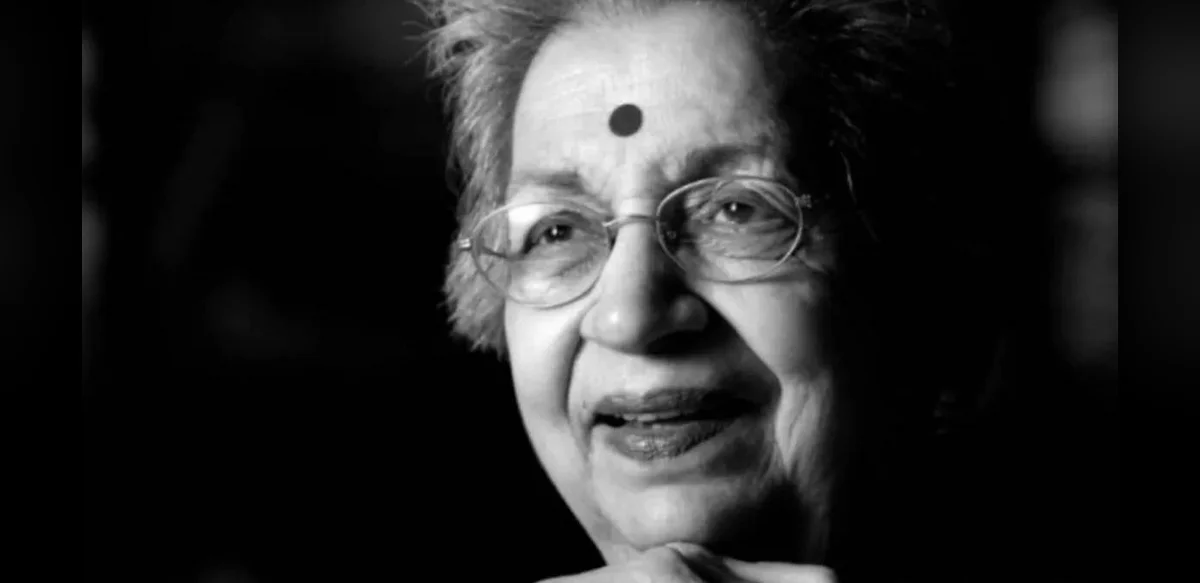
In 1953, a young woman performed as Desdemona in a college staging of Othello in Mumbai. Ebrahim Alkazi, a noted theatre director in the audience, later asked her to join his group. The performer was Vijaya Mehta, and the encounter began a lifelong connection to theatre. She died on June 30 at age 91.
Born Vijaya Jaywant in Vadodara on November 4, 1934, to parents active in the Theosophical Society, she grew up near Indian cinema yet showed little interest in it. Her aunts included Nalini Jaywant and Shobhna Samarth; cousins were Nutan and Tanuja. Through her first marriage to Harin Khote, Durga Khote became her mother-in-law. Despite this family link to films, she chose theatre instead.
Mentored by Alkazi and later Adi Marzban, Mehta refined skills that helped modernize Marathi theatre. In the early 1960s she co-founded Rangayan in Mumbai with Vijay Tendulkar, Shriram Lagoo and Arvind Deshpande. The group moved away from mythological spectacle toward contemporary stories. Mehta directed key works including Sakharam Binder, Hayavadana, Ghashiram Kotwal, Wada Chirebandi and Purush, the last running more than 1,500 performances.
Director Mohit Takalkar recalled her influence. She watched his productions and offered direct feedback without condescension. He noted her ability to balance experimental and commercial approaches, working with writers such as Tendulkar, Mahesh Elkunchwar and Girish Karnad while keeping their plays accessible. A scene in Wada Chirebandi illustrated her skill in creating powerful stage moments beyond the text alone.
In 1973 Mehta collaborated with Fritz Bennewitz on a Marathi version of Brecht’s The Caucasian Chalk Circle, which appeared at the Brecht Festival in Berlin. She also introduced Indian audiences to Eugene Ionesco’s absurdist plays. As chairperson of the National Centre for the Performing Arts in Mumbai, she hosted international figures including Peter Brook and Jerzy Grotowski for workshops.
Mehta later entered cinema. Her 1985 film Rao Saheb earned a National Film Award for Best Supporting Actress. She appeared in Shyam Benegal’s Kalyug and Govind Nihalani’s Party, bringing stage-honed precision to the screen. She also published an autobiography, Jhimma.
Among her honors were the Sangeet Natak Akademi Award for Direction in 1975, the Padma Shri in 1986 and the Sangeet Natak Akademi Tagore Ratna in 2012. Her lasting contribution remains the performers she trained.

