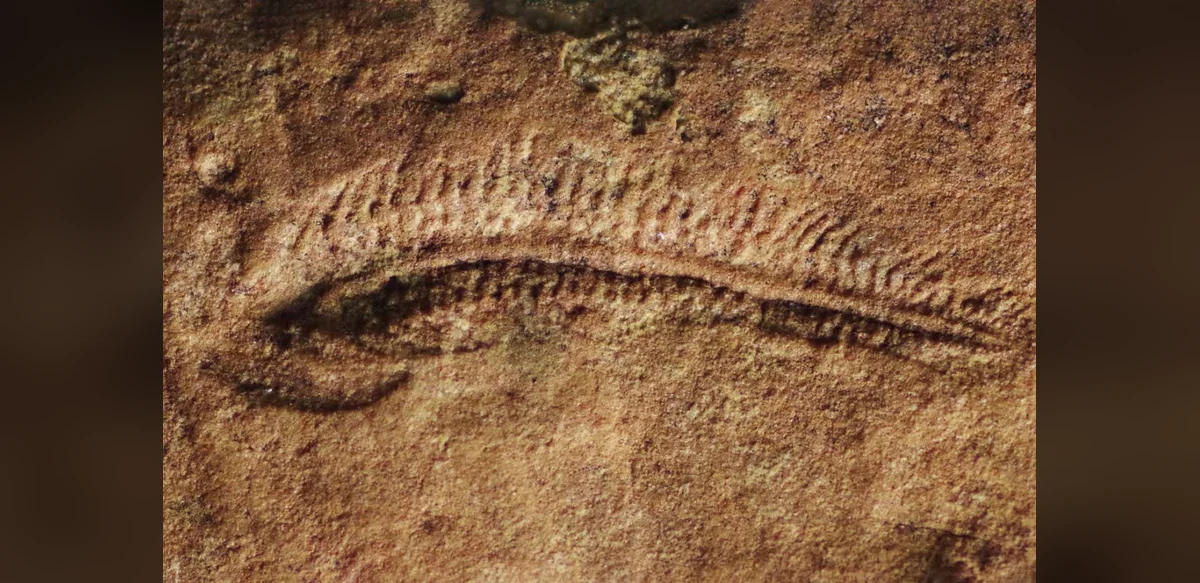
Fossils of Spriggina floundersi offer the earliest known sign that animals preferred one side of the body, a trait linked to nervous system development seen in modern right- and left-handedness. These 555-million-year-old worms lacked limbs yet showed a clear bias toward turning right, pointing to an advanced nervous system. The pattern appeared well before the Cambrian Period began around 541 million years ago. Researchers examined 100 specimens from South Australia. The animals lived in shallow seas during the Ediacaran, when multicellular life spread widely. Twice as many fossils curve left, indicating the living worms bent right because the impressions are reversed. The bias matches patterns observed in living species today. Some fossils show bends in both directions, suggesting the worms could turn either way and avoid circling. The findings indicate that traits such as mobility, symmetry and handedness originated in the Ediacaran and provided a base for later animal groups to evolve greater complexity during the Cambrian.