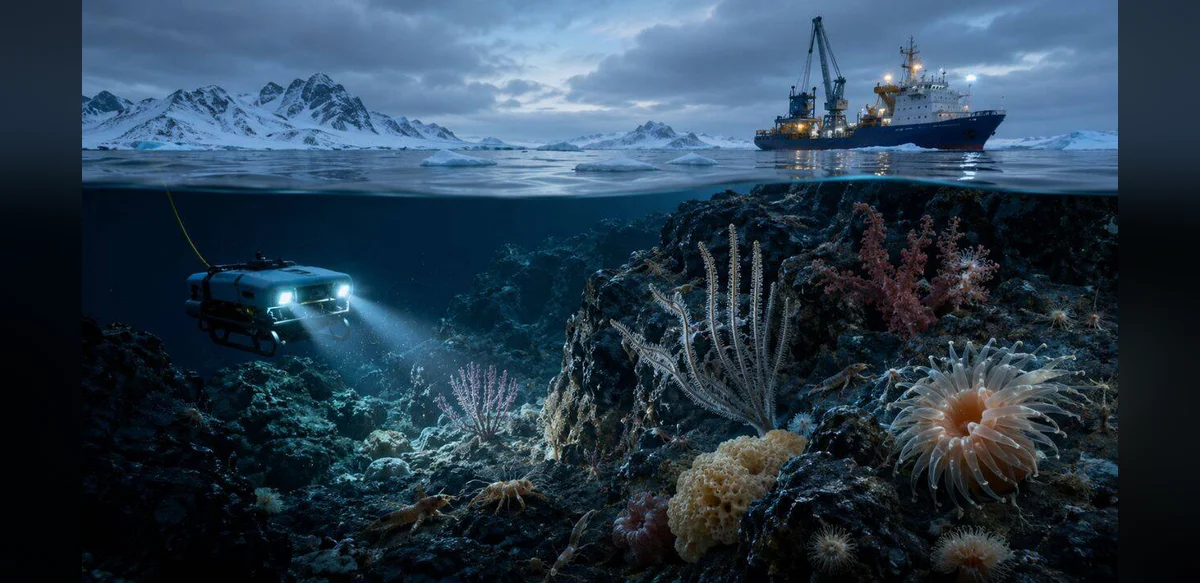
A month-long expedition has documented rare marine life in the Arctic deep sea off Norway at depths reaching 3,000 metres. Scientists aboard a Greenpeace research vessel used remotely operated vehicles to survey seamounts, hydrothermal vents and seabed habitats. The footage comes as Norway debates deep-sea mining. Exploration plans are paused until at least 2029, yet the surveyed waters lie within zones previously opened for mineral exploration. Researchers say the images and samples will help address major knowledge gaps about these little-studied ecosystems. The expedition recorded species seldom seen in their natural setting, including a Dumbo octopus and hundreds of sponge specimens. Some organisms may represent species new to science. Deep-ocean habitats are hard to study because of their remoteness and the need for specialised equipment. Experts note that many deep-sea organisms grow slowly, live long and produce few offspring, making recovery from disturbance difficult. Climate change adds further stress through warming and acidification that affect cold-water species. Interest in seabed mining stems from demand for minerals such as cobalt, nickel and rare earth elements used in batteries and clean-energy technologies. Norway has cited these resources as a reason for exploring its seabed. Environmental groups argue that greater recycling and longer product life could reduce the need for new mining. International talks on seabed management continue under the International Seabed Authority. Norway was among the first nations to approve large-scale plans for Arctic seabed mineral exploration.