

Ladakh became a Union Territory without a legislature after separation from Jammu and Kashmir in 2019. The administration now plans to extend the Ladakh Autonomous Hill Development Council Act to seven newly formed districts through suitable legal measures. Seventeen additional tehsils have also been notified, raising the total to 32. Until 2019 the region had only Leh and Kargil districts. Five new districts—Sham, Nubra, Changthang, Zanskar and Drass—were created in April.
The LAHDC Act, enacted in 1997, provides for elected councils similar to state legislative bodies. Each council comprises 26 directly elected members plus up to four nominated representatives from religious minorities and women. Councils hold executive authority over land use, development planning, budget preparation and certain local taxes.
Officials say the new districts and tehsils form part of reforms to improve grassroots administration, bring services nearer to residents and support infrastructure in remote areas. Ladakh covers 59,146 square kilometres and had a 2011 population of 274,000. Settlements lie at elevations up to 16,000 feet, complicating service delivery. The region includes Shia Muslim and Buddhist communities, with Muslims at 46 percent and Buddhists at 39 percent of the population.
Some local voices have criticised the distribution, claiming more tehsils were allocated to the former Leh district than to Kargil and noting an imbalance in Muslim-majority versus Buddhist-majority districts.
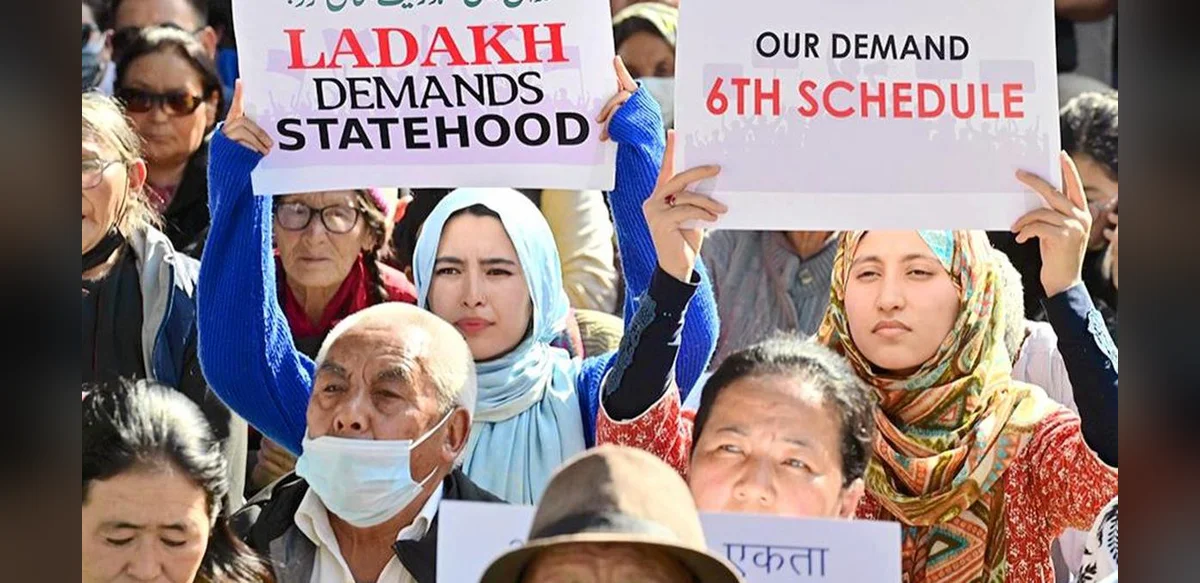
Recent years saw protests over land, culture, language and demands for statehood and Sixth Schedule protections. Demonstrations in September 2025 turned violent, resulting in four deaths and dozens injured. Talks between the Ministry of Home Affairs and local groups produced a draft agreement in May that endorses safeguards under Article 371 to protect identity while advancing development. Further discussions on operational rules are planned.


