


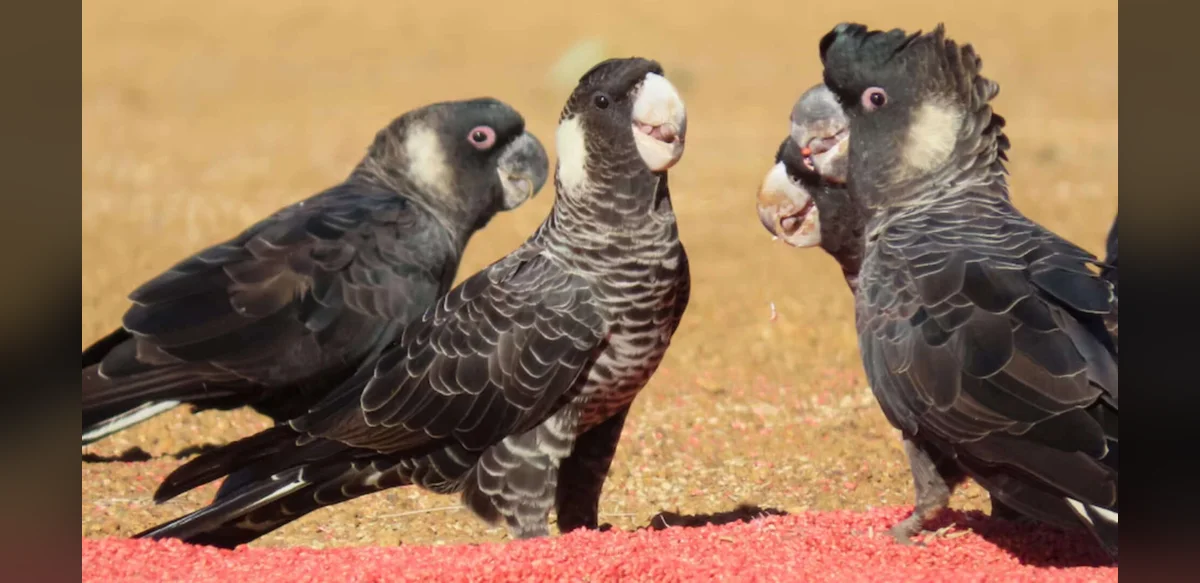
Researchers tracked endangered Carnaby’s black cockatoos across five sites in Western Australia’s Wheatbelt region over three breeding seasons. They discovered high levels of pesticide residues in the birds’ food sources. About 80 percent of seed samples contained at least one pesticide, and more than half had mixtures of three or more chemicals. Some concentrations exceeded legal limits by hundreds of times.
The Murdoch University team used satellite tracking to identify feeding locations and then collected seed samples near grain silos. They detected 26 different pesticides, including 10 neurotoxic substances. Lead researcher Zoe Kissane noted that the birds repeatedly returned to the same contaminated sites, raising concerns about chronic exposure.
The findings may help explain Carnaby’s Hindlimb Paralysis Syndrome, a condition observed in the birds since around 2012. Several of the detected chemicals remain in use in Australia but are restricted or banned in Europe, the UK, and North America. The researchers recommend simple improvements in grain handling to reduce spills and limit wildlife access to contaminated areas.

