


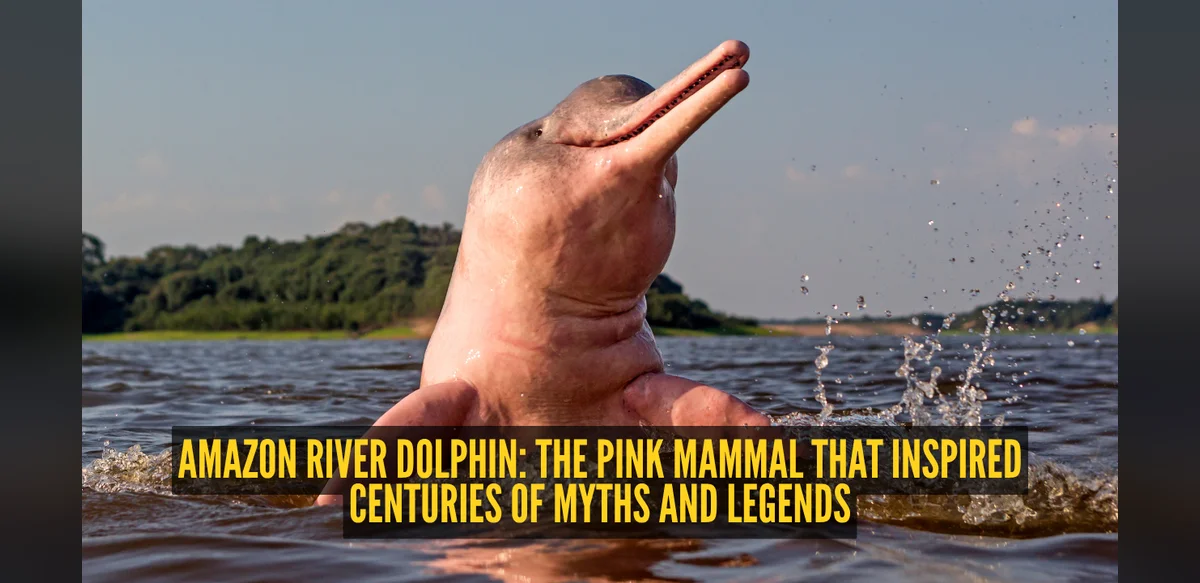
The Amazon river dolphin, also called the boto, ranks among the planet’s most distinctive mammals. It inhabits the winding rivers and flooded forests of the Amazon and Orinoco basins, noted for its vivid pink hue and high intelligence. Unlike ocean dolphins, this freshwater species has evolved for life in cloudy waters, depending on echolocation to find food and move about. Its biological traits and long history with local people have generated myths and traditions that still influence communities across the region.
Scientifically named Inia geoffrensis, it is the largest freshwater dolphin. Adults grow to 2.5 metres long and exceed 180 kilograms. Young are grey, but most adults turn pink due to age, blood circulation, scars from social contact, and natural differences.
Physical adaptations suit river conditions. Unfused neck vertebrae allow head rotation among submerged trees. A long narrow snout holds numerous teeth. In sediment-heavy waters with low visibility, the species uses echolocation, sending sound waves to detect prey and obstacles.
The dolphin features prominently in folklore across Brazil, Peru, Colombia and neighbouring countries. Indigenous and riverside groups tell tales of the boto as a shape-shifter that becomes a well-dressed young man at night, wearing a hat to hide its blowhole while dancing. These accounts have explained unusual events and formed part of oral heritage. Many view the animal as a river guardian, with beliefs discouraging harm to it.
The IUCN lists the species as Endangered owing to falling numbers from habitat loss, pollution and human pressure. Dams, deforestation, mining and contaminants have damaged its environment. Mercury from illegal gold mining has tainted waters and food sources. Some dolphins are taken for fishing bait.
Conservation organisations and researchers now work with communities on habitat safeguards, anti-poaching measures and population monitoring. Protecting the dolphin also preserves a rich freshwater ecosystem supporting many other species. Its distinctive traits, colour and cultural role make it a singular part of Amazonian nature, requiring sustained research and local involvement.

