


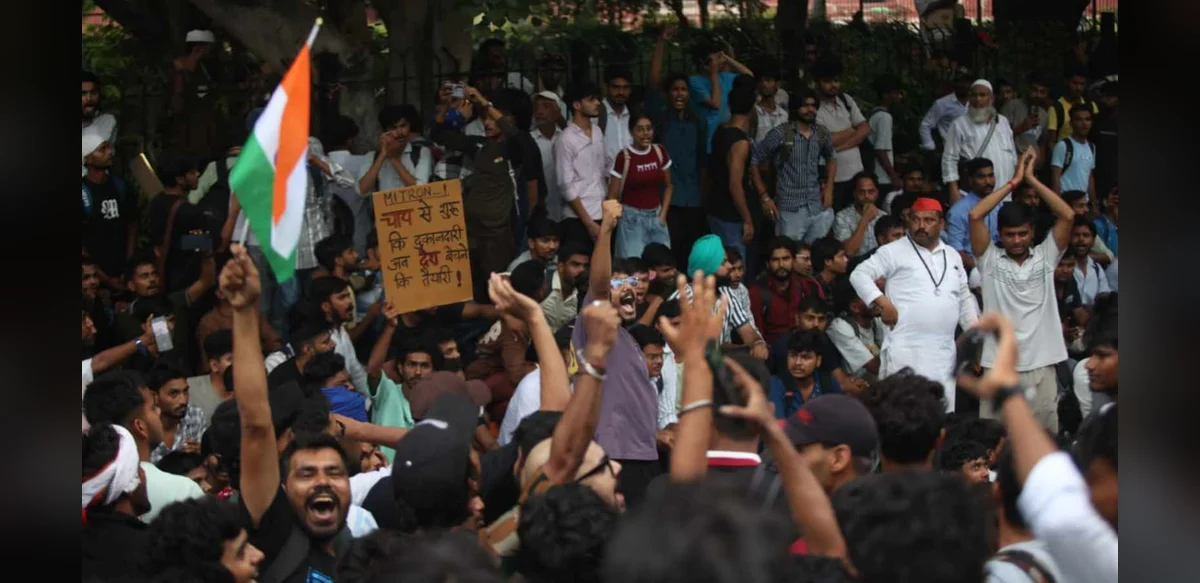
Anger over exam paper leaks reached the streets of Delhi on Monday, prompting a police response to the demonstrators. Opposition leaders criticised the central government and demanded a parliamentary discussion on the issue.
Several opposition figures described the situation as a chance to pressure the administration. They vowed to interrupt proceedings in the coming days and called for the resignation of the Union Education Minister, a key demand from the protesters.
The Leader of the Opposition accused the Prime Minister of being anti-youth, claiming he had failed to act against the minister despite numerous leaks that affected millions of students. He said the youth faced punishment while those responsible remained free.
Congress leaders met allies to plan their approach in Parliament. They decided to raise the matter of police action against protesters more forcefully. In the Rajya Sabha, the opposition leader highlighted the impact on students and criticised the response to demonstrations at Jantar Mantar.
A Congress MP called the use of force on young people unacceptable, noting that Parliament should serve their interests. Some opposition members compared the protests to earlier movements and hoped for similar political effects.
Leaders emphasised the need to use the visible public anger. They planned to submit adjournment motions and continue disrupting proceedings until a debate on education reforms occurs. Discussions among opposition parties also covered other topics such as temple donations, though paper leaks remained the priority for several groups.

