


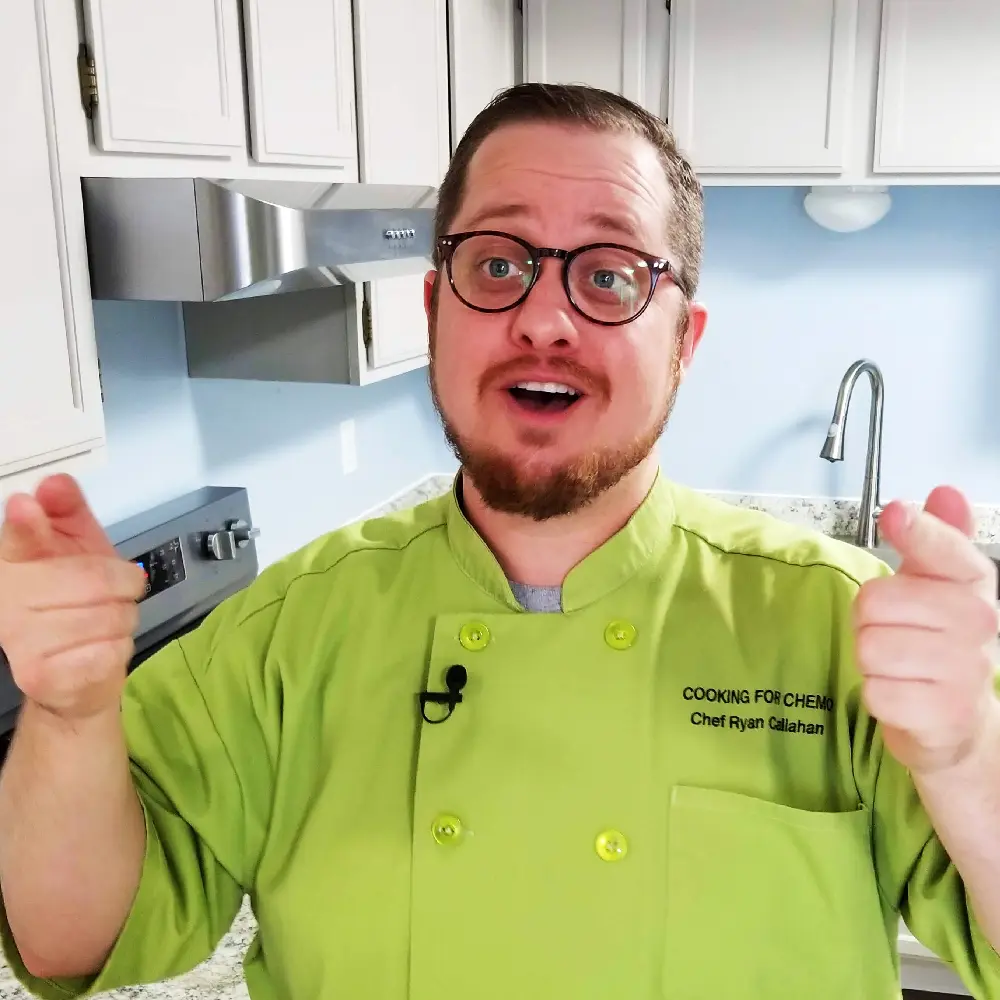
Since 2015 Chef Ryan Callahan has focused on teaching everyone in the realm of cancer how to understand and adjust for the taste and flavor perception changes that occur during and after chemotherapy treatments.
If chemo is making it hard for you or a loved one to eat well, Chef Ryan’s cooking strategies may help you.
Cancer is exhausting. Losing the joy of food on top of everything else can feel cruel. Food is memory. It’s comfort. It’s identity. When taste changes, it can feel like you’ve lost part of yourself.
Chef Ryan Callahan
Chef Ryan Callahan knows a thing or two about cooking for people going through chemotherapy. The award-winning cookbook author and chef stepped into the role of cancer caregiver when his mother received a breast cancer diagnosis. He provided loving support along the way, including throughout her post-surgery chemotherapy treatment.
“As I had seen before with both of my grandfathers and my best friend Tommy, all of whom had cancer and underwent chemotherapy, [my mother] too began to find that all food and beverages began to taste metallic,” Chef Ryan writes on his website Cooking for Chemo.
He worried that his mother might lose her appetite to eat, as his other loved ones had due to cancer.
“I swore that I would do whatever it took to make food taste good for her again,” Chef Ryan writes. “I cooked every meal for my mom and stayed home every day as her cancer caregiver, doing every task from cleaning the house to washing her clothes and everything in between.”
Chef Ryan and his mom smile for a photo
Chef Ryan, pictured with his mom in 2013.
After his mother’s second round of chemotherapy, Chef Ryan had an Aha! moment.
“I was able to finally figure out the techniques that would allow my mom to eat [during] cancer treatment. It was so simple too. It was just like one of those moments where a light bulb goes on in your head, illuminating an idea that aligns all your thoughts and knowledge into one simple concept that you realize you had known the whole time.”
We had to know more. So, we chatted with the chef about key techniques he uncovered. Here are his starter tips to boost appetite and flavor when going through chemo:
1. What is the most important thing to know when cooking for people going through chemo?
Chef Ryan: Everyone is different. That’s not a cliché. That’s the foundation. I am not cooking for what I taste. I’m cooking for what they taste right now. And what they taste today may not be what they taste tomorrow.
Chemo doesn’t change the food. It changes the perception of the food. So, I don’t assume. I taste with them. I adjust in small increments. I watch their reaction. I ask questions. I treat it like a moving target — because it is.
If they’re not eating, nothing else matters. So, my job is to make food edible first; perfecting comes later.
2. How does chemotherapy impact taste perception, and why does it matter?
Chef Ryan: Chemo throws the senses out of alignment.
Taste changes. Smell changes. Texture sensitivity changes. Even memory changes. Chemo affects your entire body. Something that used to bring comfort can suddenly feel, smell, and taste wrong. A favorite dish might taste metallic. Or flat. Or bitter.
That mismatch is frustrating. It’s disorienting. It kills appetite. And appetite matters. When someone stops eating, strength drops. When strength drops, everything gets harder — physically and emotionally.
So, this isn’t about gourmet cooking. It’s about preserving strength. It’s about preventing starvation. It’s about survival.
3. You call herbs and spices “the nose of your food.” How are they helpful?
Chef Ryan: Flavor isn’t just what happens on the tongue. Most flavor happens in the nose.
Herbs and spices give character. They create aroma. They add the depth that salt and sugar alone can’t give. Herbs and spices also help you build an appetite from a distance. It’s the first sense that tells you that food is cooking.
But I go slow.
Potency matters. Freshness matters. Some spices can trigger nausea in certain people. So, I under-season first. I taste. I adjust. I work with the person to see what spices and herbs build appetite, and which ones diminish appetite. I use the ones that work, not the ones that don’t.
I’m not trying to overpower the food. I’m trying to highlight what’s already there. Great cooking doesn’t mask ingredients — it celebrates them.
4. Not all sugar is bad. What are healthy sources, and how can they help?
Chef Ryan: Sweet is a balancer. I use things like: Fruit. Honey. Maple syrup. Natural sweetness from vegetables. Even dairy has natural sugars.
Sweet rounds out sour. It softens bitterness. It calms sharp edges. It activates pleasure centers in the brain.
Sugar isn’t necessarily unhealthy. Over-consumption is. When I cook at home, I’m not dumping a cup of sugar into everything. I’m using small, intentional amounts to create balance. Maybe one or two tablespoons in a whole pot of sauce. Sweet is the final adjustment knob. Used correctly, it brings everything together.

