


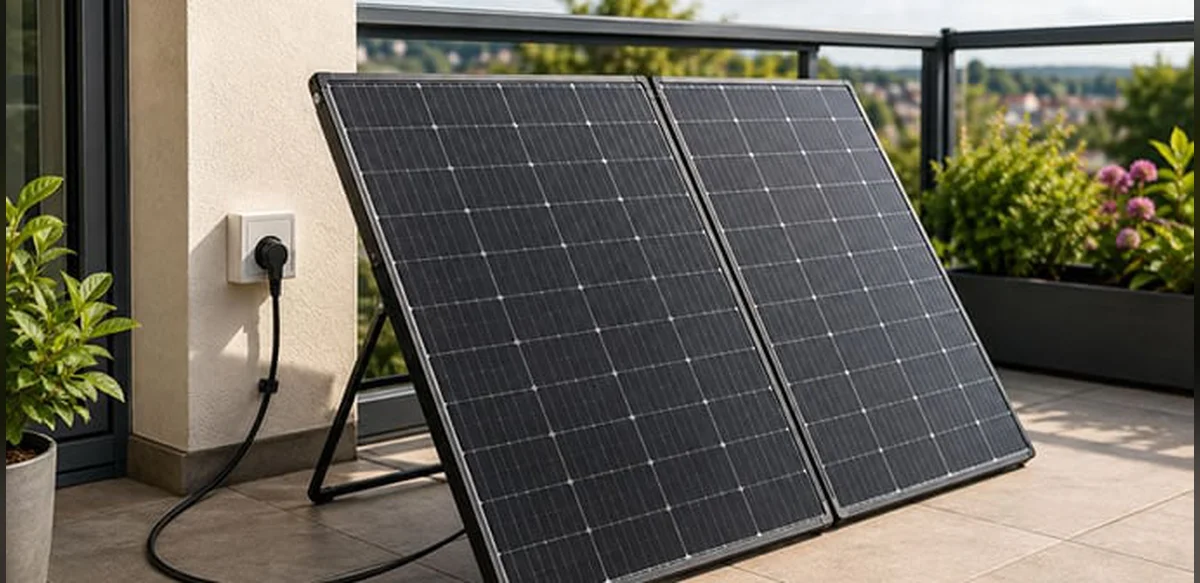
Plug-in solar panels have recently become permitted for use throughout Great Britain, prompting many households to consider whether these devices offer meaningful reductions in electricity costs. These compact units connect directly to standard household outlets and generate power from sunlight without requiring complex wiring or professional installation in most cases.
The technology allows homeowners to produce a portion of their own electricity, which can offset usage from the grid during daylight hours. Manufacturers claim that a typical setup might produce enough energy to power small appliances or contribute to overall household needs, though actual output depends on factors such as location, weather patterns, and panel orientation.
Legal changes in Great Britain now permit these plug-in models, removing previous restrictions that limited their adoption. Regulators have established safety standards to ensure compatibility with existing electrical systems, reducing risks associated with improper connections. This development has opened the market to a wider range of consumers interested in renewable energy options.
Cost calculations vary widely based on initial purchase price, expected lifespan, and local electricity rates. A basic unit might cost several hundred pounds, with payback periods estimated between five and ten years under favorable conditions. Households in sunnier regions or those with higher daytime consumption may see faster returns compared to others.
Energy experts note that savings are generally modest for most users because plug-in panels produce limited wattage compared to full rooftop systems. They serve best as supplementary sources rather than primary replacements for grid power. Seasonal variations also affect performance, with reduced output during winter months when sunlight is scarce.
Maintenance requirements remain low for these devices, typically involving occasional cleaning and inspection for damage. Unlike larger installations, they do not usually need structural modifications to buildings. However, users must verify compatibility with their home’s electrical setup to avoid issues with circuit breakers or wiring capacity.
Government incentives for small-scale renewables may further influence the financial equation, though specific support for plug-in models differs from programs aimed at larger arrays. Consumers are advised to review current tariffs and any available grants before committing to a purchase.
Comparisons with traditional solar solutions highlight trade-offs in efficiency and scale. Full systems often deliver greater long-term benefits but involve higher upfront costs and professional oversight. Plug-in options appeal to those seeking simpler entry points into solar energy without extensive commitments.
Environmental considerations include the reduced carbon footprint from decreased grid reliance, though manufacturing and disposal of panels carry their own impacts. Overall, the technology contributes to broader goals of increasing renewable adoption at the household level.
Market availability has grown following the regulatory update, with various models offered by multiple suppliers. Prospective buyers should examine product specifications, warranty terms, and independent reviews to make informed decisions aligned with their energy usage patterns.
Future developments in battery storage could enhance the value of plug-in panels by allowing excess energy to be saved for later use. Current limitations in storage mean most generated power must be consumed immediately or exported under net metering arrangements where available.
Household surveys indicate growing interest in these accessible solar solutions, driven by rising energy prices and environmental awareness. Actual savings realized by early adopters provide useful data for refining expectations across different property types and consumption profiles.
In summary, while plug-in solar panels represent a convenient option now available across Great Britain, their financial benefits depend on individual circumstances. Careful assessment of costs, output potential, and usage habits remains essential for determining suitability.

