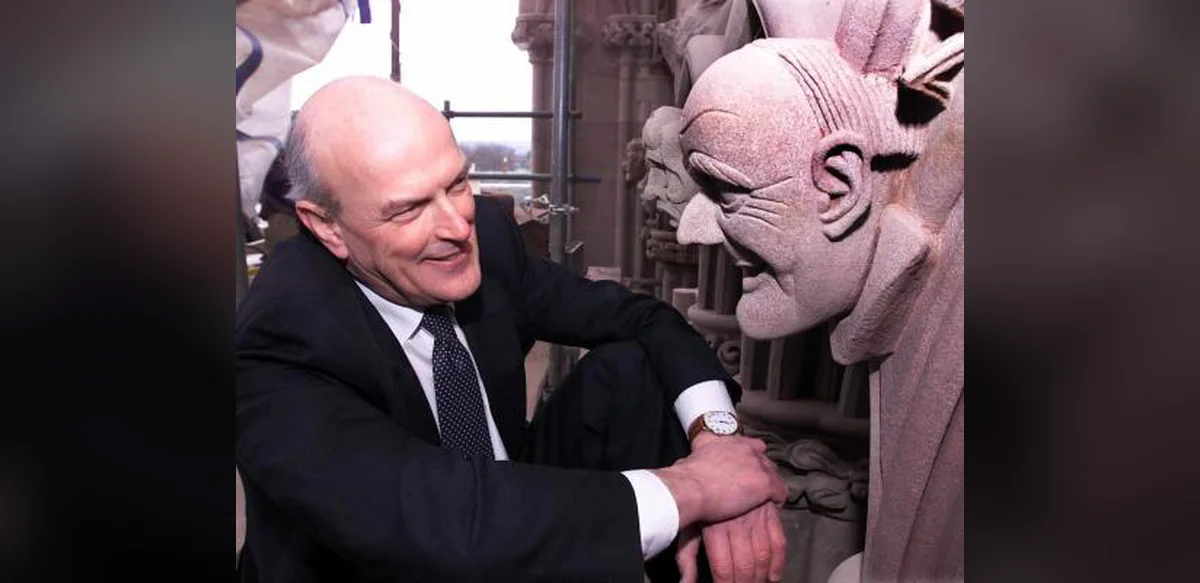
Sir Neil Cossons, who passed away at 87, appeared as a polite and traditional individual. However, throughout his distinguished career in museums and heritage, including 14 years leading the Science Museum, he proved fiercely persistent in disputes with officials, board members, and government figures over strategies and budgets. He focused on safeguarding and showcasing the UK’s scientific and industrial legacy while ensuring cultural access for everyone. In 2000, he assumed the role of chairman at English Heritage, the organization tasked with protecting historical sites, later divided into Historic England and a charitable entity managing 400 locations. During his initial year, he headed a committee that created Power of Place, a key report developed with other groups, emphasizing the importance of broader historical areas like main streets, urban centers, and residential neighborhoods. This document shaped his priorities there. He publicly criticized London’s mayor at the time, Ken Livingstone, for allowing substandard high-rises to disrupt the city’s skyline, and he advocated for protecting row houses in Liverpool and other northern areas facing large-scale removal. He pushed to maintain funding for English Heritage and to persuade leaders of heritage’s role in everyday national life, beyond mere tourism. In 2005, when the culture secretary, Tessa Jowell, described a 5% cut in government support as positive for the organization, he openly disagreed with her during a public event. Observers viewed his bold statement as that of someone concluding his tenure and moving to private work, but at 66, he renewed his commitment, departing only in 2007. He started amid the launch of major lottery-backed projects for the millennium across the nation, some delayed. A prominent example was the British Museum’s £100 million Great Court by Norman Foster. Cossons faulted the institution for neglecting its responsibility by using less expensive French stone rather than British Portland material. He took over English Heritage’s major initiative for Stonehenge, where visitor amenities had been labeled a national embarrassment by lawmakers, but plans stalled due to disputes over tunneling a nearby highway beneath the area. A new center opened in 2013, though debates on the tunnel persisted. Born in Beeston, Nottingham, to Arthur, a school principal, and Evelyn (nee Bettle), an educator, Cossons attended Henry Mellish grammar school in Bulwell and earned a geography degree from the University of Liverpool in 1961. His passion for industrial history and archaeology came from his father, who instructed evening classes for miners and organized family trips to related locations. Following positions at Leicester Museum, the Railway Museum in Swindon, and Bristol City Museum as technology curator, he became deputy director of Liverpool Museum at 29. In 1971, he was named the inaugural director of the Ironbridge Gorge Museum Trust in Shropshire, seen as the origin of the Industrial Revolution. He worked to conserve not only the ironworks and iconic bridge but also the everyday structures where workers resided, viewing them as vital to the narrative. During his leadership, Ironbridge grew into a popular destination, attracting 250,000 visitors annually by his exit, and gained UNESCO World Heritage status in 1986. He relocated to London in 1983 to direct the National Maritime Museum in Greenwich, then took the Science Museum helm in 1986. The current director, Ian Blatchford, noted that Cossons’ influence remains evident throughout the facility. The Wellcome Wing, now called the West Hall, debuted in 2000, reflecting his view that exhibits should engage visitors actively. It contrasted with older sections, including a simulation of the 1995 Kobe earthquake’s effect on a supermarket that shook the floor, and housed the UK’s largest Imax screen then. Among English Heritage’s purchases during his 2000 chairmanship was his preferred structure, the 18th-century Ditherington Flax Mill in Shrewsbury, which he first saw as a student. By the late 20th century, it stood empty and deteriorated, holding Grade I listed status.