


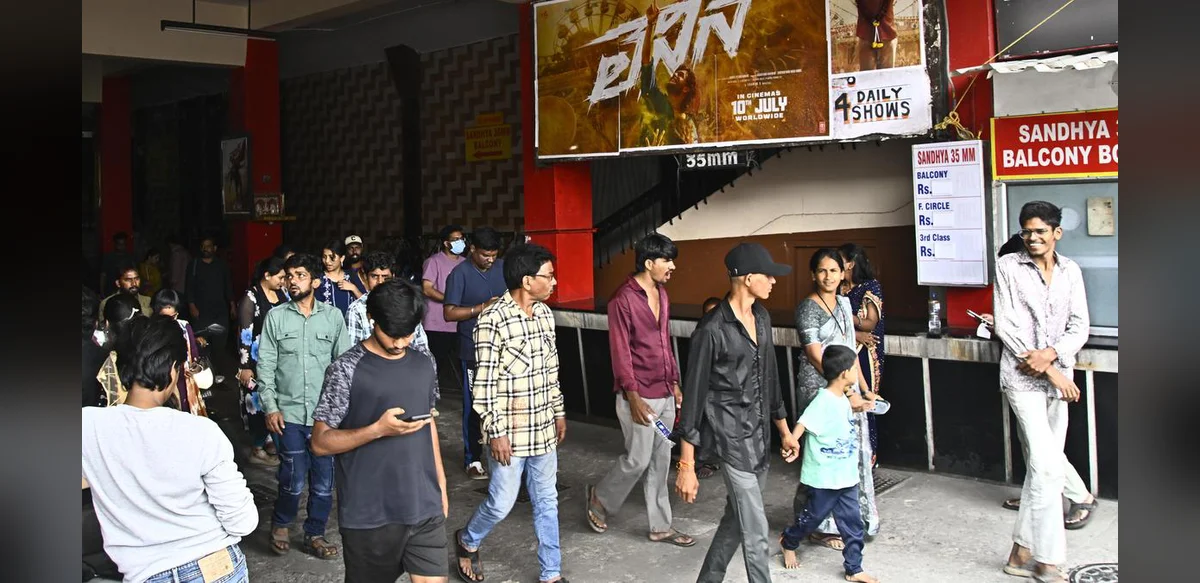
As the film Lenin, starring Akhil Akkineni and Bhagyashri Borse, saw growing attendance after its July 10 release, its producers monitored piracy sites closely. By the end of the opening weekend, the Murali Kishor Abburu movie avoided the fate of several other Telugu releases in 2025, with no pirated copies appearing online.
This success stems from a joint anti-piracy effort by commandos, police staff and the Anti-Video Piracy Cell of the Telangana Film Chamber of Commerce, operating from the Telangana Cyber Security Bureau’s Integrated Command and Control Centre in Hyderabad.
The drive intensified after the bureau and the chamber signed an agreement in January 2026 to combat digital film piracy. Real-time monitoring has since allowed officials to spot and remove illegal content within minutes.
TGCSB director Shikha Goel explained the bureau’s role: “Someone watching a pirated film unknowingly supports a system where such sites connect to portals involved in betting and child sexual abuse. We intervened because piracy sites now serve as entry points to wider cybercrime networks.”
The TGCSB reports that more than 22,000 URLs with pirated films were removed in the past seven months. AVPC chairperson Rajkumar Akella noted that around 800 were rogue sites that ignored industry complaints, requiring police action.
He warned that takedowns alone are insufficient, as new links appear rapidly. “The main challenge is breaking up piracy syndicates. Two recent arrests by Telangana police have created fear in these networks,” he said.
The bureau views the arrests of Jignesh Batbarbhari Solanki, caught allegedly recording the Telugu film Dacoit at a Cinepolis theatre in Thane, and Rahul Mehta, accused of distributing pirated copies online, as key successes.
Police say Jignesh had recorded over 50 films in Telugu, Hindi, Tamil, Malayalam, Punjabi, Kannada and Gujarati. His Telugu targets this year included The Raja Saab and Mana Shankara Vara Prasad Garu. Records show Rahul was previously arrested in 2017 over piracy of Baahubali: The Conclusion.
The arrests followed months of tracking. Forensic analysis of pirated prints from 38 films used invisible watermarks to trace recordings to specific theatres. Rajkumar credited Goel’s team for coordinating with Mumbai authorities to arrest the suspect in Thane.
Film producer Supriya Yarlagadda, involved in AVPC efforts, said the arrests are deterring offenders. “The few arrests in the last year have sent a clear message. Those doing camcorder recordings are now more cautious.”
She added that over 300 piracy sites are repeat offenders, using polished interfaces that copy legitimate streaming services to attract users: “These sites draw ad revenue from betting platforms, dark web portals and data theft operations.”
Goel stressed that enforcement needs public awareness. While many theatres show anti-piracy slides, the bureau is pushing exhibitors to add posters and audio warnings.
The industry is also calling on the Centre to tighten rules on international cloud-hosting platforms that host sites such as TamilRockers, Cinevood and Movierulz.
“If regulations required KYC details from portal operators, it would help curb piracy,” Rajkumar said.
The South Indian Film Producers’ Association has petitioned Union Minister Ashwini Vaishnaw to hold platforms like Telegram accountable for circulating pirated films.
Rajkumar noted that increased enforcement has pushed some syndicates abroad. Forensic checks on a pirated copy of Peddi traced the recording to a theatre in Malaysia.
The industry is now testing technologies such as anti-glare systems to hinder in-theatre recording.

