


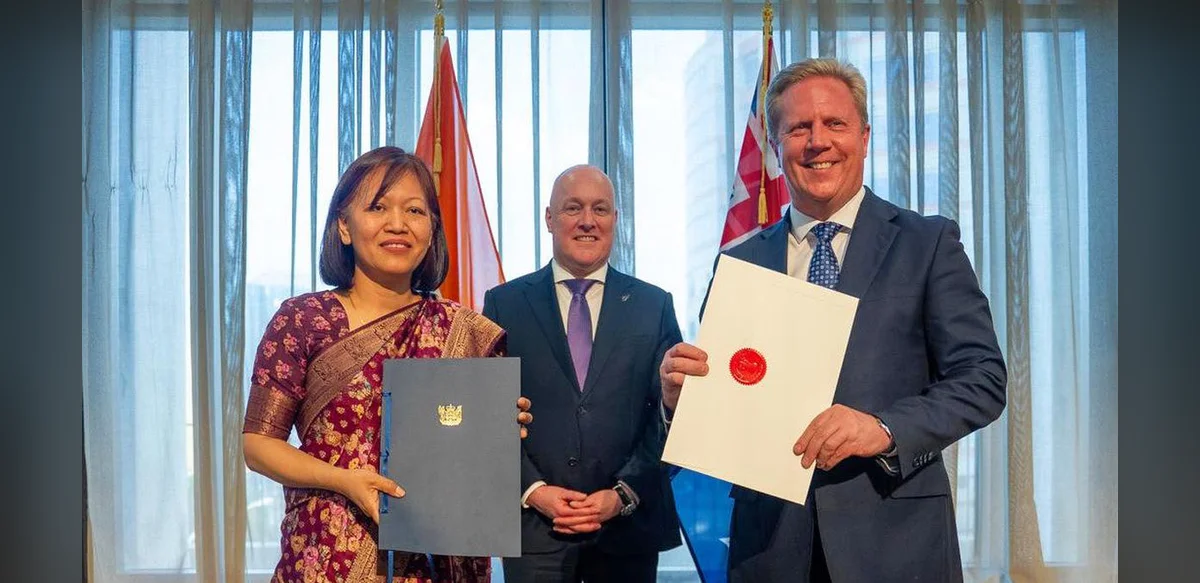
The governments of India and New Zealand have completed the ratification process for their bilateral free trade agreement. The pact is scheduled to become operational on October 20. Under the terms, New Zealand will eliminate tariffs on every category of goods originating from India. In return, India will lift or lower duties on 95 percent of the products it currently imports from New Zealand.
Officials from both countries described the agreement as a balanced framework that opens new commercial channels while respecting each side’s domestic priorities. The removal of duties by New Zealand covers the full range of Indian exports, including manufactured items, agricultural produce, and processed foods. On the Indian side, the tariff adjustments focus on goods that New Zealand supplies in significant volumes, such as dairy products, wool, and certain machinery components.
The agreement follows several rounds of negotiations that addressed market access, rules of origin, and dispute settlement mechanisms. Once in force, the pact is expected to streamline customs procedures and reduce administrative costs for traders on both sides. Government statements emphasized that the deal aligns with broader efforts to diversify trade partnerships and strengthen supply chain resilience.
Business associations in India have welcomed the certainty provided by the fixed tariff schedule. Exporters anticipate easier entry into the New Zealand market, particularly for textiles, pharmaceuticals, and engineering goods. Importers in India note that lower duties on selected New Zealand products could moderate costs for downstream industries that rely on those inputs.
New Zealand authorities highlighted the complete elimination of tariffs as a significant step that gives Indian suppliers full duty-free access. They also pointed to the reciprocal concessions granted by India as evidence of mutual benefit. The agreement does not alter existing sanitary and phytosanitary standards or technical regulations, which remain governed by separate bilateral understandings.
Implementation will involve coordination between customs agencies to verify origin documentation and apply the agreed tariff rates. Both governments have committed to establishing a joint committee that will review the functioning of the pact at regular intervals and address any operational issues that arise.
The ratification marks the conclusion of a process that began with the signing of the agreement earlier this year. With the October 20 start date confirmed, traders are preparing documentation and logistics arrangements to take advantage of the new tariff regime from the first day of enforcement.
Observers expect the agreement to contribute to incremental growth in bilateral merchandise trade over the coming years. The framework leaves room for future discussions on services and investment, although those areas are not covered in the current text. Both sides have indicated that the present deal provides a foundation for deeper economic engagement if conditions permit.
The text of the agreement has been published on the official websites of the commerce ministries in both countries. Stakeholders are encouraged to review the tariff schedules and rules of origin chapters to determine eligibility for preferential treatment. Customs authorities have issued guidance notes to assist companies in completing the necessary paperwork.
Overall, the ratification and scheduled entry into force represent a concrete step toward expanded commercial ties between the two economies, with clearly defined tariff commitments that take effect on October 20.


