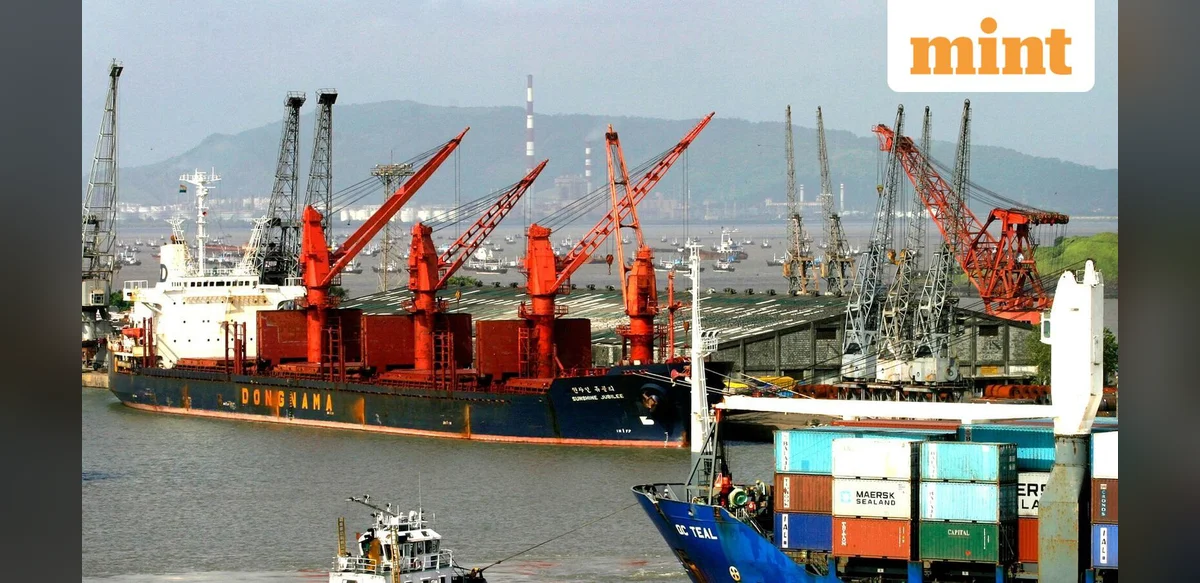
Indian merchandise exports rose 18 percent during May, driven by shipments of engineering items, petroleum goods and electronics. Exports reached an estimated 45.20 billion dollars, compared with 38.30 billion dollars in the same month last year, according to preliminary figures issued by the commerce ministry on Monday. Imports grew 20.6 percent to 73.41 billion dollars from 60.86 billion dollars. The resulting trade gap expanded to 28.21 billion dollars from 22.56 billion dollars a year earlier. Services exports increased to 36.76 billion dollars from 32.46 billion dollars, while services imports rose to 19.06 billion dollars from 16.70 billion dollars. The combined trade shortfall, covering both goods and services, widened to 10.51 billion dollars from 6.79 billion dollars. Overall exports, including goods and services, climbed to 81.96 billion dollars from 70.76 billion dollars, and total imports grew to 92.47 billion dollars from 77.55 billion dollars. Exports demonstrated notable resilience as shippers adapted to prevailing global conditions and maintained their standing three months into the conflict, stated Madan Sabnavis, chief economist at Bank of Baroda. Higher crude oil prices pushed imports upward and sustained the larger deficit. The provisional statistics appeared after the United States and Iran reached a peace agreement expected to reduce tensions near the Strait of Hormuz, a vital passage for energy and trade. The accord should support India’s commerce and energy prospects by lowering transport expenses, stabilizing supply lines and easing volatility in regional markets. Earlier tensions had blocked the strait, limiting shipments to Persian Gulf ports and forcing exporters toward costlier alternative routes. Smaller firms, responsible for 48 percent of national exports, encountered elevated freight charges and shipment delays. The Reserve Bank of India observed on 5 June that global economic conditions featured greater uncertainty, interruptions to trade paths and supply networks, heightened market swings and cautious business attitudes in recent months. Rising energy costs and ongoing trade policy doubts present upward pressures on India’s current account deficit for fiscal 2027, though a services surplus and inbound remittances may offer relief, the central bank noted. Merchandise exports posted solid gains in April despite higher freight and insurance expenses. Services exports remained steady amid continued demand. Goods exports reached 43.56 billion dollars in April versus 38.28 billion dollars the prior year. Imports rose 10 percent to 71.94 billion dollars from 65.38 billion dollars, widening the April trade gap to 28.38 billion dollars from 27.1 billion dollars. India aims to more than double total exports to 2 trillion dollars by fiscal 2031, split evenly between merchandise and services. Officials have been directed to emphasize micro, small and medium enterprises, agricultural goods, quality certification and promotion of Brand India. Weak worldwide demand and elevated logistics expenses remain challenges for goods exports, while services exports are projected to continue growing on healthy demand for Indian offerings.