


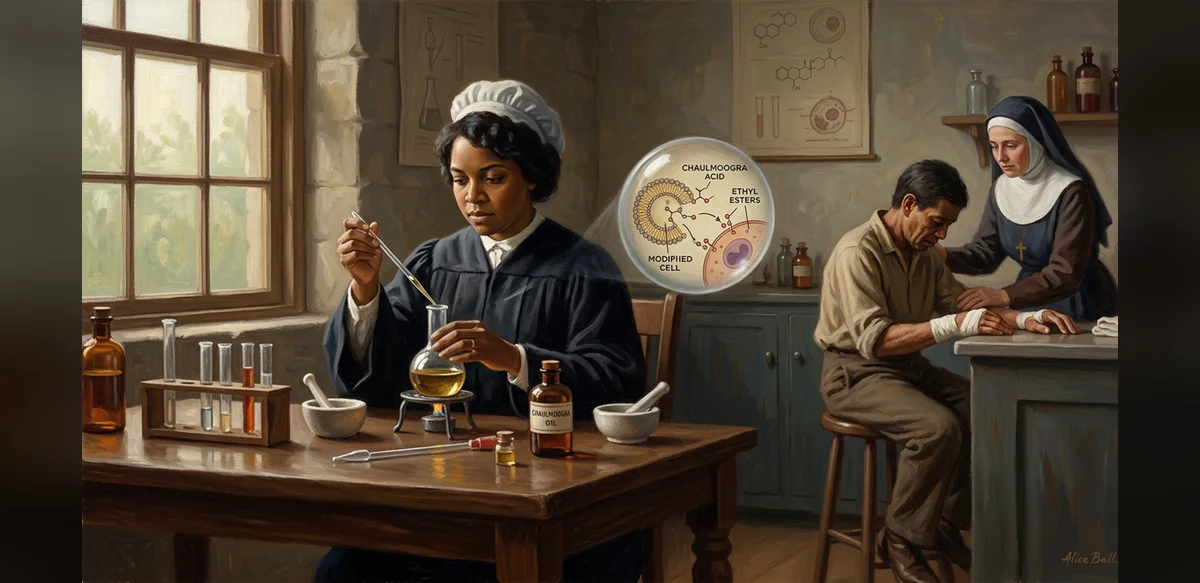
Alice Augusta Ball had a brief life marked by significant scientific contributions that were overlooked for years before recognition of her impact. Her technique for processing chaulmoogra oil created an effective leprosy therapy that offered new possibilities to patients around the globe.
Born into a middle-class African American family in the late nineteenth century, Ball gained early familiarity with chemistry through her family’s photography work. She excelled in science and earned two bachelor’s degrees from the University of Washington in pharmaceutical chemistry and pharmacy. These qualifications prepared her for a brief yet influential career whose effects are still noted today, even as later treatments improved leprosy management.
Ball received a rare scholarship to the College of Hawai‘i, where she became the first woman and first African American to obtain a master’s degree in chemistry. Her research on compounds from the kava root drew the interest of public health officer Harry T. Hollmann, who saw potential applications for leprosy treatment.
Leprosy, or Hansen’s disease, results from Mycobacterium leprae, identified in the 1870s. Long known in tropical areas and documented since ancient times, the illness damages nerves and produces skin lesions along with deformities of fingers and toes that sometimes required amputation. High stigma led to isolation of affected individuals in separate facilities.
Accepting Hollmann’s request, Ball developed the Ball Method, which transformed chaulmoogra oil’s fatty acids into water-soluble ethyl esters suitable for injection. Prior forms of the oil were viscous, poorly absorbed, and hard to administer. The new approach gained worldwide use and improved outcomes for leprosy patients.
The formulation spread through the bloodstream without causing skin reactions or leakage. At Kalihi Hospital in Hawai‘i, treated patients tested negative for bacteria, showed healing lesions, and many left isolation to return home. This preparation served as the leading therapy until sulfone drugs such as dapsone replaced it in the 1940s.
Ball’s role received little notice due to her gender, youth, and race. She died at age 24, possibly from a lab incident. Her department head, Arthur L. Dean, published the findings without credit and presented them as the Dean method. Decades later, Hollmann reviewed records and restored proper attribution to Ball.
By age 24, despite obstacles, Ball had produced a lasting change in leprosy care. Her short career demonstrated substantial influence on global health practices.

