


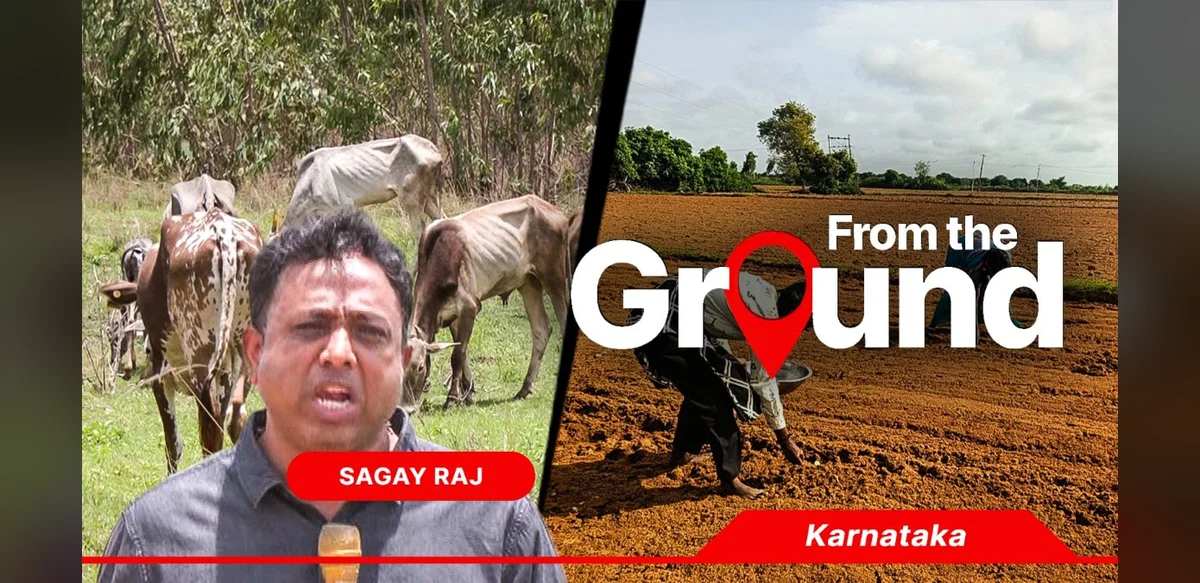
Karnataka faces the threat of drought following a weak Southwest Monsoon that has left much of the state dry. Sowing has been delayed, reservoir levels have dropped, and farmers are under strain. The state recorded rainfall deficits between 30 and 42 per cent in the first half of the season. Chief Minister DK Shivakumar has requested a central team to evaluate the situation.
State data show that 21 of 31 districts have experienced severe rainfall shortages, affecting farming and water supplies. June saw a 42 per cent deficit, with only 116 mm of rain against a normal 199 mm, marking it the fourth-driest June in five decades.
The shortfall has hit Malnad and coastal areas hardest. Kodagu recorded an initial 63 per cent deficit. South Interior Karnataka reported a 40 per cent shortfall, while North Interior Karnataka saw deficits of 13 to 28 per cent.
Although no statewide drought has been declared, farmer groups are calling for immediate aid, including 40,000 rupees per affected farmer. Crops are withering and inflows to reservoirs such as the Tungabhadra Dam remain low.
In Thotli village of Kolar district, sowing has nearly stopped. The district has received 140 mm of rain since January against a normal 170 mm, creating a 15 per cent deficit. Of 85,801 hectares of cultivable land, only about 2,200 hectares have been sown. Farmers await rain to plant ragi, maize, cowpea and field beans.
More than half of July has passed, raising fears that late sowing will cut yields. About 78,286 hectares in Kolar rely solely on rainfall.
Local farmers report that May and June brought little rain. Dairy and horticulture producers also face shortages of fodder and water. Tomato prices have fallen sharply, and mangoes sell for as little as three rupees per kilogram.
Livestock owners say cattle lack both fodder and drinking water, making cultivation of ragi impossible without rain.
The Chief Minister has directed district officials to prepare for possible drought and to avoid negligence. He noted that 178 taluks face deficient rainfall and reservoir storage stands at about 40 per cent of capacity. Drinking water supply is now the top priority.
Officials must verify conditions on the ground. Priorities include fodder, crop insurance, groundwater management and relief works. The government has released 329 crore rupees for immediate measures and allowed districts to spend up to one crore rupees where needed.
Water releases for irrigation will depend on available storage. The Chief Minister plans to inspect fields personally and has ordered ground assessments to be completed within 15 days before a report is sent to the Centre.

