


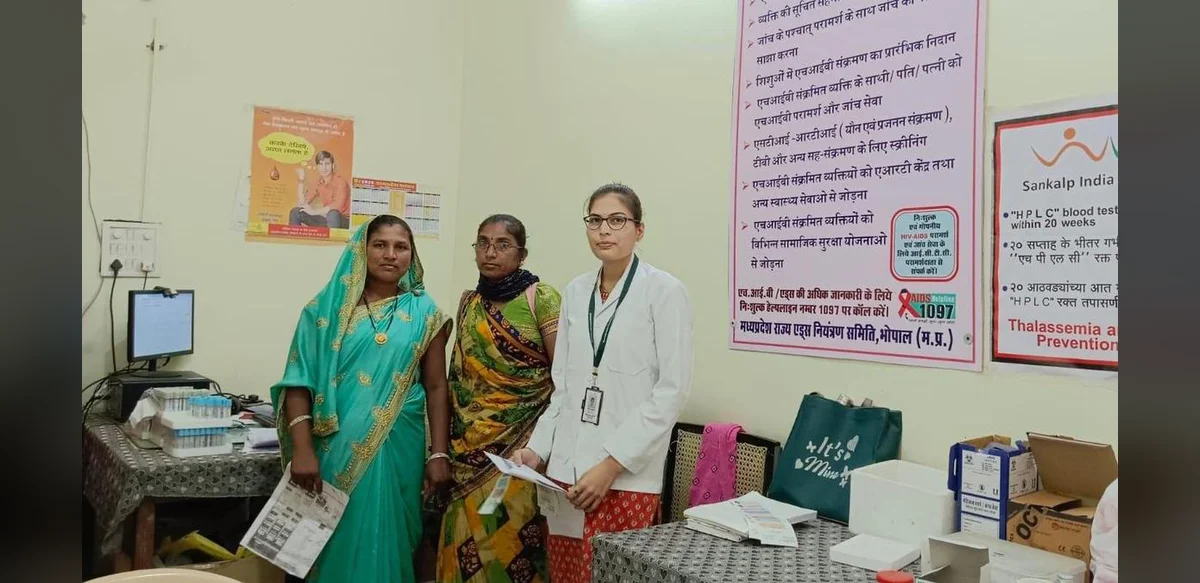
A large multi-state study has demonstrated that specialized prenatal diagnostic services for thalassemia and sickle cell disease can be provided safely and effectively at district hospitals and through referral networks. This approach could extend advanced preventive care to families in rural and semi-urban areas of India.
The results, published in Blood Global Hematology, align with India’s target of eliminating sickle cell disease and greatly lowering thalassemia rates by 2047.
The research examined a prevention program run by Bengaluru-based Sankalp India Foundation together with state governments, the National Health Mission, and fetal medicine experts in Karnataka, Gujarat, Maharashtra, Andhra Pradesh, and Madhya Pradesh.
Since 2021, more than 218,000 pregnant women at 82 districts and 87 maternity centers have been screened for hemoglobin disorders. A coordinated referral system enabled 2,092 invasive prenatal diagnostic procedures, which helped avert 286 births affected by severe hemoglobin disorders.
Instead of requiring families to travel to major cities, the program linked at-risk pregnant women to fetal medicine specialists nearer their homes.
Traditionally, invasive prenatal diagnosis was offered only in cities such as Delhi, Mumbai, Hyderabad, or Bengaluru. For many families in tribal and remote districts, travel to these centers during pregnancy was not feasible, said Rajat Kumar Agarwal, president of Sankalp India Foundation.
The program bridged this gap by connecting screening sites with 26 existing fetal medicine centers and central diagnostic laboratories. Samples were collected locally and sent to accredited labs, showing that the method is safe and effective without building new facilities.
The screening covers both thalassemia and sickle cell disease using the same test. Most families accessed the pathway through district-level public health facilities.
No samples were lost and diagnostic failures remained minimal despite collection at multiple sites and transport to central labs. A digital platform coordinated counseling, referrals, lab processes, and tracking.
After counseling, 66.2 percent of high-risk couples chose invasive prenatal testing and 61.7 percent completed diagnosis. When the fetus was affected, nearly two-thirds opted for medical termination following informed counseling.
Safety outcomes were positive, with post-procedure spontaneous abortion occurring in only 0.4 percent of cases, comparable to international figures.
The study concluded that a three-step model of HPLC screening, molecular confirmation, and invasive prenatal diagnosis can deliver high-quality, resource-efficient services. It provides a scalable way to reduce the burden of transfusion-dependent thalassemia and severe sickle cell disease across India.

