


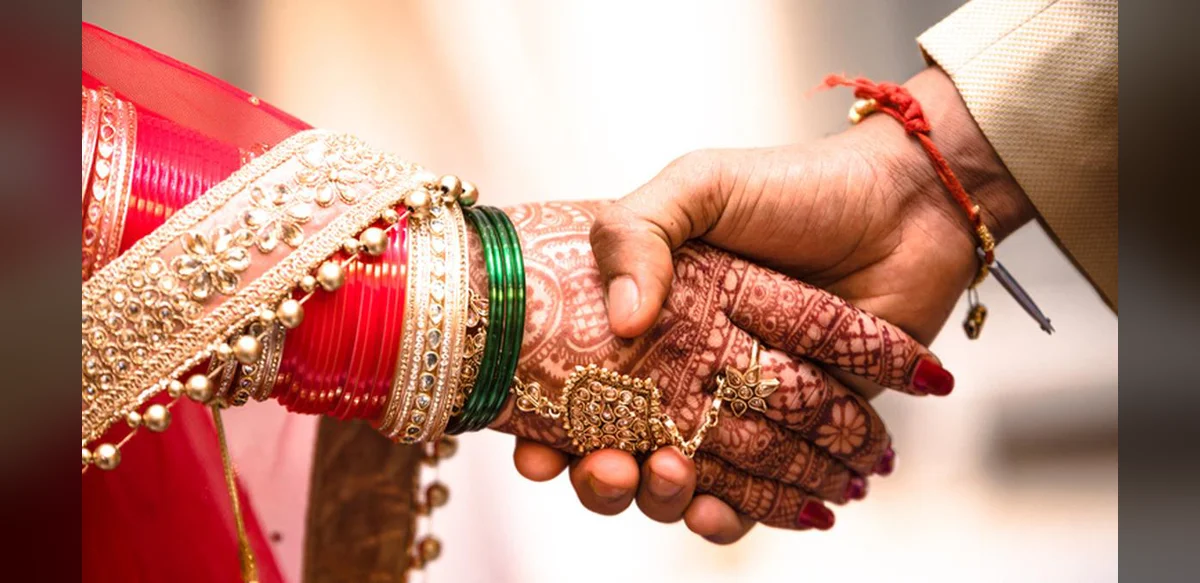
The Gujarat High Court has held that mere registration cannot establish the validity of a Hindu marriage unless customary rites and ceremonies, including saptapadi, have been conducted. Marriage is not simply an event for celebration, the court observed.
In its June 23 order, the court noted that such ceremonies, which vary by region and culture, are intended to purify and spiritually transform the individuals involved.
The ruling was delivered on an appeal by a man based in the United Kingdom who challenged a family court decision refusing to declare an alleged marriage void. The division bench comprising Justices Ilesh Vora and R.T. Vachhani quashed the family court order from November of the previous year. The judgment became available on June 29.
The bench stated that essential ceremonies such as saptapadi, involving seven steps taken jointly by the couple before a sacred fire, confer spiritual, social, and legal recognition on a Hindu marriage as a sacrament.
Appellant Kaushal Sonar sought a declaration that the marriage was null and void. He resides in the United Kingdom, while the respondent lives in Ahmedabad. Sonar informed the court that he became aware of the claimed marriage only when the respondent presented a certificate to his parents. He maintained that no marriage was solemnised, no rites performed, and no conjugal life shared. He further alleged that his signature on documents was obtained through fraud.
The court observed that the respondent had admitted before the family court that no rites or ceremonies took place and that the parties never lived as husband and wife. Consequently, the family court erred in dismissing the petition.
Referring to Section 7 of the Hindu Marriage Act, the bench emphasised that a Hindu marriage must be solemnised according to customary rites, including saptapadi, to be complete and binding. Since no such ceremonies occurred, the fundamental requirement for a valid Hindu marriage was missing.
The court described marriage under Hindu tradition as a sacrament forming the basis of family life and urged individuals to approach the institution with due seriousness and understanding of its significance.

