


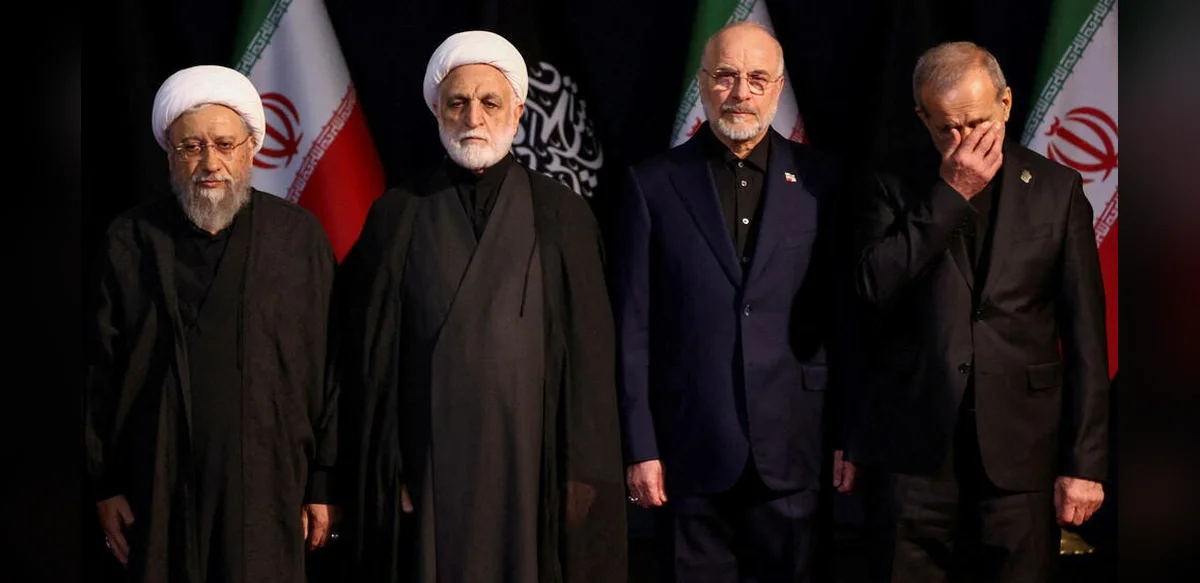
Iran’s political establishment faces an intensifying power struggle. Hardline factions accuse the visible leadership of staging a soft coup following an agreement with the United States. Supreme Leader Mojtaba Khamenei has stayed out of public view, according to a CNN report.
Tensions surfaced during the funeral of former Supreme Leader Ali Khamenei in Tehran last week. As President Masoud Pezeshkian walked beside the coffin, some mourners chanted death to the compromiser rather than honoring the late leader.
Foreign Minister Abbas Araghchi, central to negotiating the ceasefire and sanctions relief with the Trump administration, also faced hostility. Reports indicate he left the funeral after mourners threw stones and labeled him a traitorous sellout.
The hostility reflects a growing narrative among Iran’s hardline groups. They claim senior officials who negotiated with Washington seek to sideline revolutionary leadership while Mojtaba Khamenei, successor to his father, has remained largely absent amid security concerns. Some critics speculate health issues explain the absence, though no official confirmation exists.
Hardliners argue the government surrendered by signing an agreement contradicting Mojtaba Khamenei’s directives instead of retaliating for Ali Khamenei’s killing in Israeli airstrikes backed by US coordination. Officials continue governing in his name, yet the new supreme leader has neither addressed the nation nor asserted authority publicly.
In his absence, Parliament Speaker Mohammad Bagher Ghalibaf, President Pezeshkian and Foreign Minister Araghchi have become the public faces of the post-war administration. Their prominence has prompted allegations from radical factions that they consolidate power by bypassing parliament, ignoring the supreme leader’s instructions and suppressing hardline demonstrations.
Days before the funeral, conservative lawmaker Mahmoud Nabavian posted on X warning of a possible coup. Afterward he declared supporters would seek vengeance for Khamenei’s death while resisting the alleged coup.
US-based Iran expert Arash Azizi told CNN that Mojtaba Khamenei’s absence has left hardliners without direct access, leading them to portray Ghalibaf and Pezeshkian as orchestrators of a political takeover.
The week-long funeral ceremonies served as a platform for uncompromising factions to demand military retaliation against the United States and reject diplomatic engagement. The call gained traction after a fragile ceasefire broke down. Revolutionary Guards attacked shipping in the Strait of Hormuz, triggering US strikes and renewed hardline calls to abandon the truce.
Even before renewed hostilities, hardline figures threatened government members over the Washington agreement. At one gathering, regime-aligned singer Mohammad Ali Bakhshi warned President Pezeshkian that failure to meet the leader’s conditions would bring severe consequences. The remarks drew criticism but no reported legal action.
Ghalibaf also faced criticism despite his Revolutionary Guards ties. Hardliners accuse him of expanding the Supreme Council for National Security’s role at the expense of parliament and the supreme leader.
The internal conflict extended to parliament. On Tuesday Nabavian and another lawmaker opposing the US agreement were removed from the National Security Commission.

