


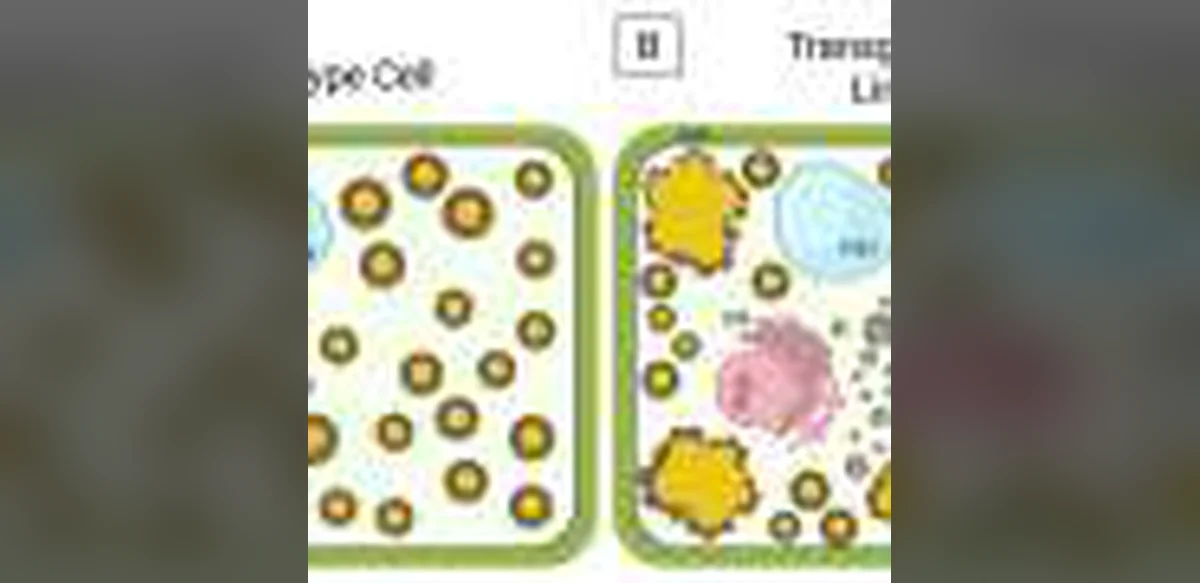
A comparison between normal and genetically modified plant cells shows how adding milk proteins changes internal storage, causing small oil bodies to merge into large, irregular forms at the cell edge. These protein-oil clusters build up without harming seed germination, indicating plants have a resilient alternative method for storing complex animal proteins.
Could plants in fields someday generate the proteins responsible for milk’s nutrition, texture and cheese-making traits? A recent study advances this idea by uncovering an unforeseen method for plant seeds to create and store one of milk’s key proteins. The finding may help address a key obstacle in making real dairy proteins without cows, supporting more sustainable dairy ingredients and alternative food systems.
Researchers at the Hebrew University of Jerusalem have advanced this aim. In work published in Frontiers in Plant Science, they showed plants can make β-casein, a major cow’s milk protein. More notably, the protein gathered in an unforeseen spot inside plant cells, pointing to an unknown route that might aid production of animal proteins in crops.
The project was headed by Prof. Oded Shoseyov along with lead author Almog Ozeri and colleagues, in partnership with Miruku, a New Zealand firm.
Electron microscopy of modified seed cells revealed the milk protein created new structures like natural casein micelles near small oil bodies, rather than reaching its planned storage site. Gold labeling highlighted these protein-rich clusters.
With rising dairy demand and worries over emissions, land and water from livestock, scientists seek sustainable ways to produce authentic dairy proteins without animals. Plant molecular farming offers promise, yet making complex milk proteins in plants has posed difficulties.
The team modified Arabidopsis seeds to produce bovine β-casein linked to part of oleosin. They tested various cell locations to find the best accumulation site.
Instead of storage vacuoles, the protein formed unrecognized clusters tied to oil bodies. These aggregates succeeded while seeds germinated normally, hinting at an alternative plant storage route for complex proteins.
Top lines reached about 1.26 percent of total soluble seed protein, exceeding many earlier casein results in plants.
“Nature can surprise,” noted Shoseyov. The discovery offers insight into plant handling of complex proteins and may improve systems for sustainable dairy protein production.
The results may also apply more broadly to plant molecular farming for high-value proteins in food and nutrition.

