


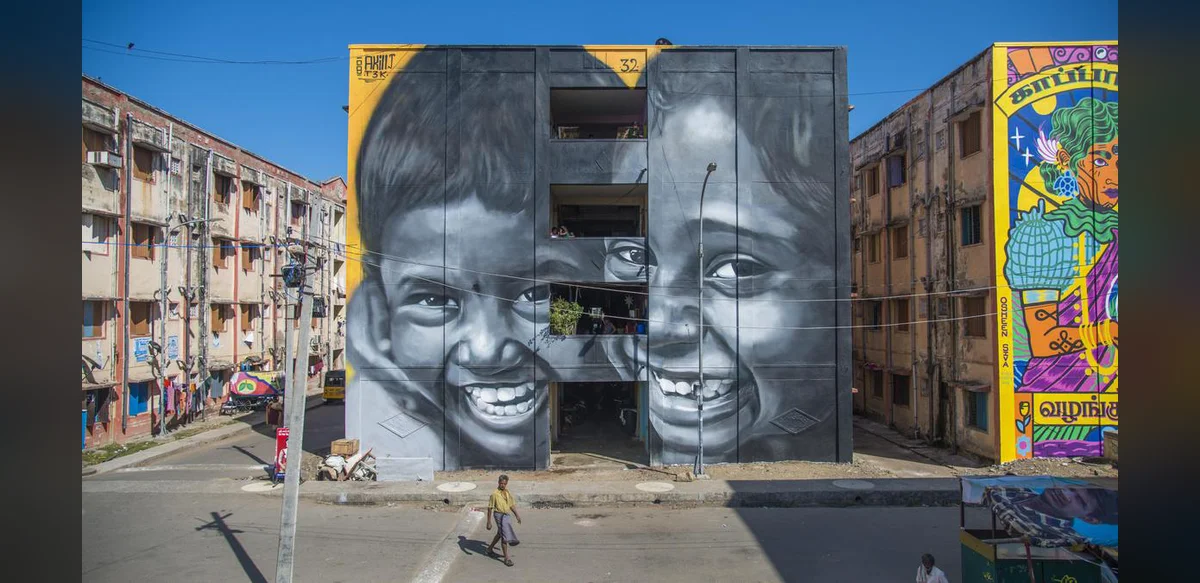
Madras has long stood as a melting pot where linguistic influences from multiple regions have blended into a distinctive local dialect known as Madras bashai. This form of speech reflects the city’s history as a hub attracting settlers, traders, and communities from across the subcontinent and beyond. Over centuries, words and expressions from Telugu, Urdu, Hindi, Kannada, Sanskrit, English, and Dutch have integrated into everyday usage, creating a vibrant and adaptable way of communicating.
The origins of this linguistic fusion trace back to Madras’s role as a major port city. Communities speaking Telugu arrived from neighboring areas and contributed vocabulary related to trade and daily commerce. Urdu influences entered through administrative and cultural exchanges with Muslim populations that settled in the region. Hindi terms found their way in via broader interactions across northern parts of the country, while Kannada elements arrived from the west.
Sanskrit has provided a foundation for many formal and literary expressions that persist in local speech patterns. English arrived with colonial administration and continues to shape modern terminology in business, education, and technology. Dutch contributions, though less prominent today, stem from early European trading posts that left traces in specific words and phrases still recognized by older residents.
This evolution of Madras bashai demonstrates how the city has consistently adapted to its diverse inhabitants. Each community brought its own linguistic heritage, which gradually merged rather than remaining isolated. The result is a dialect that feels inclusive and practical, allowing speakers to draw from multiple sources depending on context.
Residents often use this mixed vocabulary without conscious effort, illustrating the seamless integration that has occurred. Markets, neighborhoods, and public spaces serve as living examples where these influences appear in conversations about food, work, family, and local events. The dialect’s flexibility has helped preserve cultural connections while fostering a shared identity among people of varied backgrounds.
Scholars note that such linguistic borrowing is common in port cities with long histories of migration. In Madras, the process has been particularly pronounced due to the steady influx of groups over generations. Rather than one language dominating, the dialect maintains a balance that honors its multiple roots.
Today, Madras bashai remains an important marker of local culture even as the city grows and modernizes. Younger generations continue to employ these blended expressions, ensuring the tradition endures. The city’s approach to language serves as a reminder of its enduring capacity to welcome and incorporate new elements while maintaining its unique character.
Observers highlight that this openness has contributed to social cohesion in a metropolis known for its size and complexity. By embracing words from Telugu, Urdu, Hindi, Kannada, Sanskrit, English, and Dutch, Madras bashai embodies the spirit of adaptation that defines the urban landscape. The dialect stands as both a practical tool for communication and a testament to the city’s layered past.

