


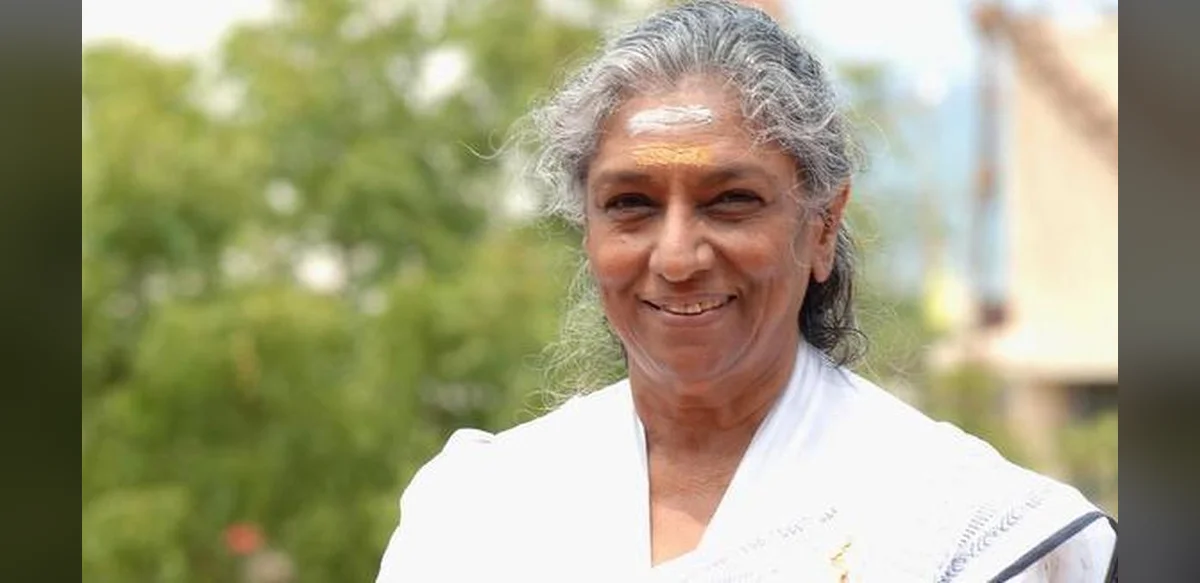
If Bharathiraja showed audiences how to view village life, S. Janaki taught them to hear the voices of its women. Her singing complemented his rural settings perfectly. Their work together turned folklore into a vivid and immediate portrayal on screen.
Janaki’s voice shaped the heroines’ emotions, including fears, desires, hopes and dreams, while Bharathiraja gave these characters prominent roles. In the film 16 Vayathinile, her rendition of Sendoora Poove begins lightly and grows more intimate, lending confidence to the character Mayilu as she expresses her feelings openly.
When singing for rural women, Janaki adjusted her tone to match Ilayaraja’s grounded compositions and Bharathiraja’s imagery. Her expressive style, like that of her frequent collaborator S.P. Balasubrahmanyam, added natural touches of hesitation, laughter or yearning suited to village settings.
In Kizhakke Pogum Rail, her performance in Poovarasampoo Poothachu moves through flirtation, shyness and hope, reflecting a young woman’s mixed feelings. In Alaigal Oivathillai, the duet Aayiram Thamarai Mottukale conveys tentative closeness between young characters discovering each other.
This authenticity made Janaki valued by heroines, audiences, stars, composers and directors. Known as Isai Arasi, or Queen of Music, she conveyed intense emotions truthfully. The vivid rural worlds in Tamil cinema owe much to both her and Bharathiraja.

