


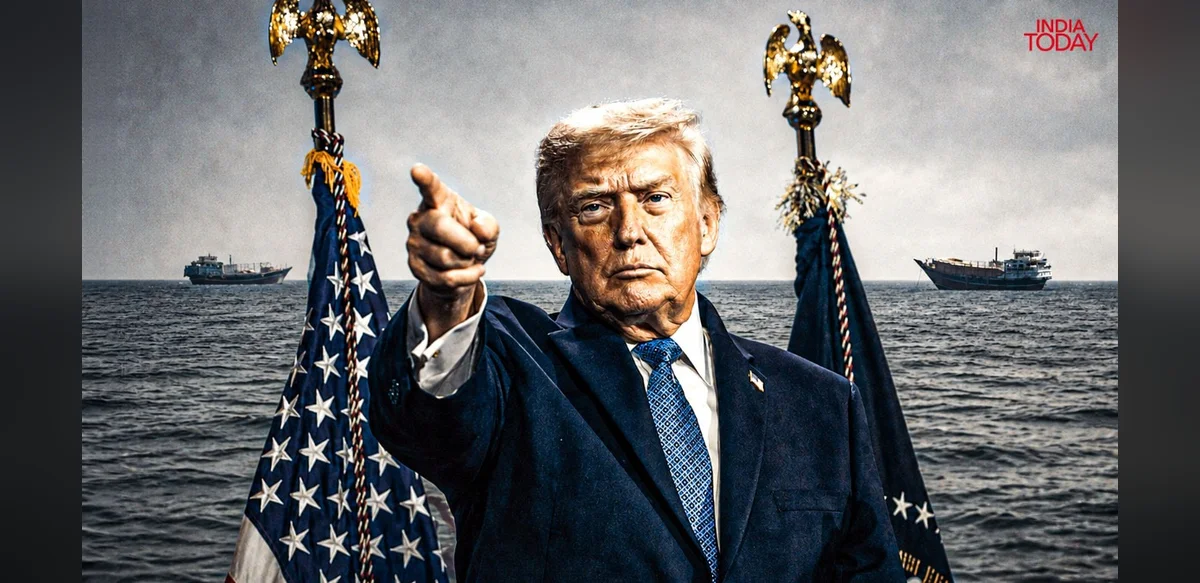
The United States and Iran stand on the edge of full-scale conflict once more. The adversaries have exchanged missile and drone attacks while declaring opposing blockades of the Strait of Hormuz, the key global oil route.
US President Donald Trump has put forward a plan to charge 20 percent of cargo value for safe passage through the strait in return for providing security. The proposal reverses earlier US policy that the waterway should stay open without fees, as it was prior to the February 28 strikes by the US and Israel.
Trump stated the US would act as guardian of the strait and that nations seeking safe transit must pay. The idea has drawn comparisons to protection payments. Any such charge would breach established rules on freedom of navigation and add further risk to the region.
Recent clashes began after Iranian strikes on shipping. Washington restored its naval blockade of Iran. During the announcement, two tankers came under attack in the strait, resulting in the death of an Indian crew member.
Shipping firms have sought greater protection. Trump indicated the US would supply it only for a 20 percent levy on cargo. He argued that Gulf states including Saudi Arabia, Qatar, the United Arab Emirates, Kuwait and Bahrain should cover costs, noting the US holds ample domestic oil reserves.
Details on collection, enforcement and refusal penalties remain absent. Iranian media announced the strait closed until further notice. Trump dismissed the claim, citing prior US strikes. Talks continue but face severe strain, with Iranian officials rejecting any US role in strait management.
The conflict has already caused loss of life and sharp rises in energy prices worldwide. The proposal has also highlighted differing US positions on tolls depending on which party seeks payment.

