


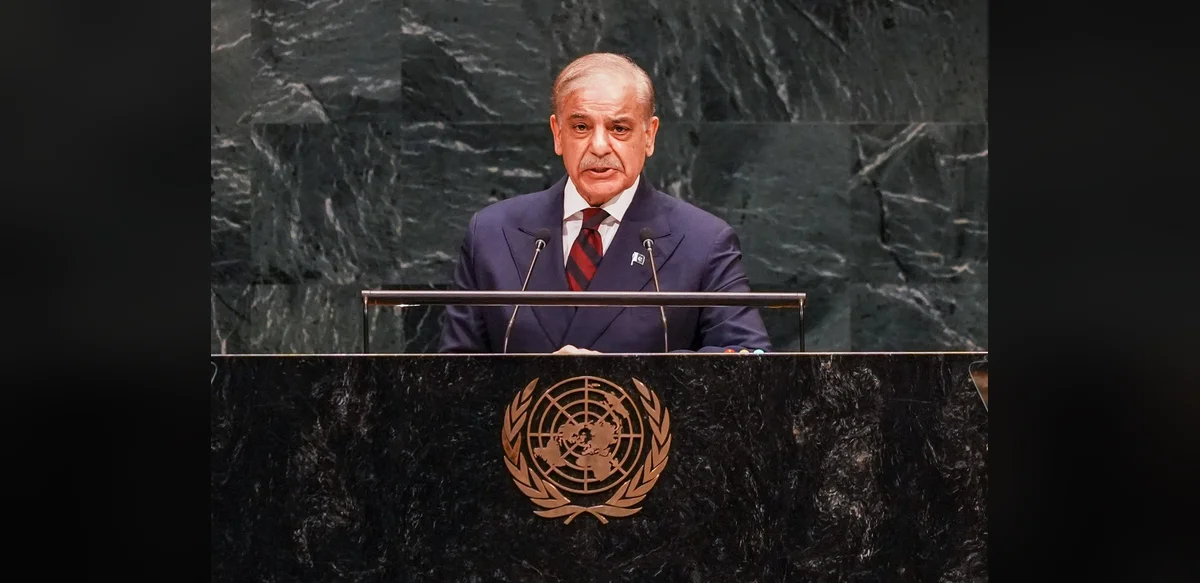
Pakistan’s prime minister addressed the United Nations General Assembly and warned that any attack by Houthi forces on the holy cities of Mecca and Medina would cross a significant red line. The statement came during a period of heightened regional tensions in the Middle East.
The prime minister spoke while senior military officials from Pakistan, Saudi Arabia and Turkey convened separately to review proposals for a Mecca pact and to explore opportunities for deeper defense cooperation. The gathering of the three army chiefs focused on practical steps to strengthen coordination among the participating nations.
Observers noted that the prime minister’s remarks at the United Nations placed emphasis on protecting religious sites of global significance. The warning was delivered in measured language and framed as a matter of principle rather than a specific operational threat.
The parallel military discussions in the region addressed a range of topics including joint training, intelligence sharing and possible mechanisms for rapid response. Participants described the talks as exploratory and aimed at building confidence among the three capitals.
Diplomats following the developments said the combination of the public statement at the United Nations and the private military consultations reflected a two-track approach. One track involved public messaging on core principles, while the other involved quiet professional exchanges on security matters.
The prime minister’s intervention drew attention because it linked the protection of holy sites directly to international norms. Several delegations at the United Nations acknowledged the sensitivity of the issue and the importance of avoiding any escalation that could affect religious pilgrimage routes.
Regional analysts pointed out that the proposed Mecca pact remains at an early conceptual stage. Details about its scope, membership criteria and implementation timeline have not yet been released. The army chiefs’ meeting was described as an initial step toward clarifying those parameters.
Pakistan’s leadership has historically maintained close defense ties with both Saudi Arabia and Turkey. The current round of consultations builds on existing bilateral arrangements while exploring possibilities for trilateral formats.
United Nations officials welcomed the prime minister’s call for restraint and noted that protecting sites of religious importance is consistent with longstanding international humanitarian principles. No immediate follow-up resolution was tabled in response to the remarks.
The army chiefs are expected to continue their discussions through established military channels. Further meetings may be scheduled once each capital completes internal reviews of the proposals presented during the recent gathering.
Overall, the episode illustrates how public diplomacy at the United Nations can intersect with confidential military talks. Both strands appear intended to signal commitment to stability while leaving room for continued dialogue among the involved parties.


