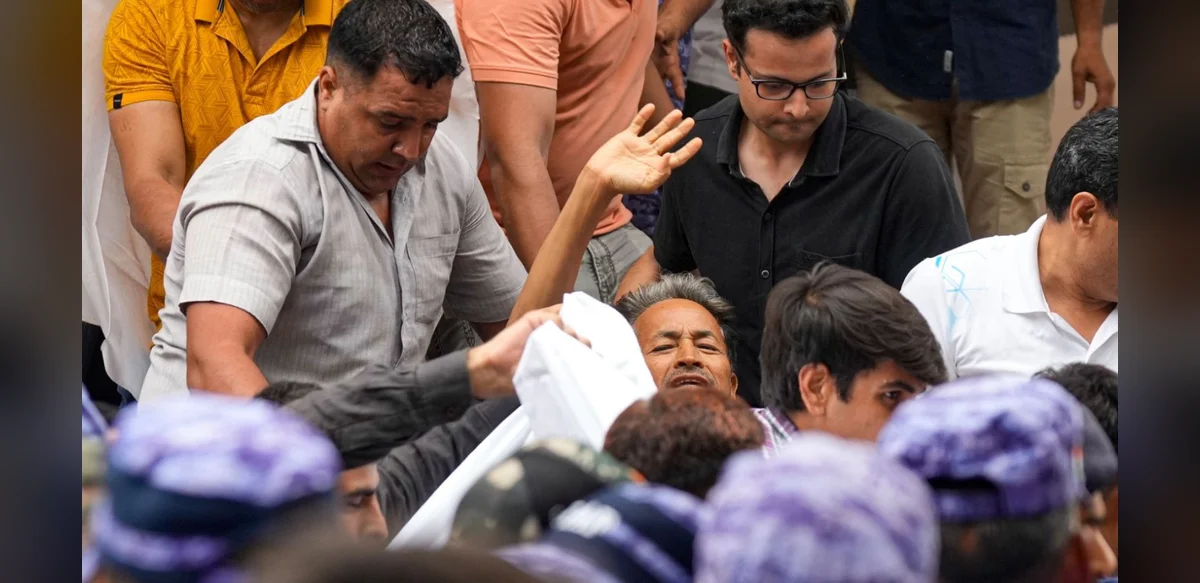
Activist Sonam Wangchuk’s hunger strike reached its 21st day at Delhi’s Jantar Mantar on Saturday before police moved him to a hospital. The 59-year-old had begun an open-ended fast on June 28 as part of a campaign by the Cockroach Janta Party demanding changes to education and examination systems and the resignation of Union Education Minister Dharmendra Pradhan over the NEET paper leak. Wangchuk, who staged a similar 21-day fast in 2024 to seek Ladakh’s inclusion in the Sixth Schedule, has become a prominent protest figure and says he will resume fasting after release. His action continues a long Indian practice of political fasting most closely linked to Mahatma Gandhi and later used by other leaders with differing results. In June 1929 Bhagat Singh, Jatin Das, Rajguru and Sukhdev launched an indefinite fast inside Lahore jail to protest harsh conditions and to claim political-prisoner status with access to reading material. Jatin Das died on the 64th day; his body drew large crowds on its journey to Calcutta. Bhagat Singh maintained the fast for 116 days until prison rules improved. In 1932 Gandhi began an indefinite fast in Yerawada jail against the British Communal Award granting separate electorates for the Depressed Classes. The six-day protest produced the Poona Pact, which raised reserved seats for Scheduled Castes while keeping joint electorates, a system still in place. Gandhi undertook another brief fast in September 1947 in Calcutta to halt Partition-related riots; violence subsided within three days. Potti Sriramulu, a follower of Gandhi, fasted from October 1952 to press for a Telugu-speaking state. He died on December 12, prompting the central government to announce the creation of Andhra Pradesh.