


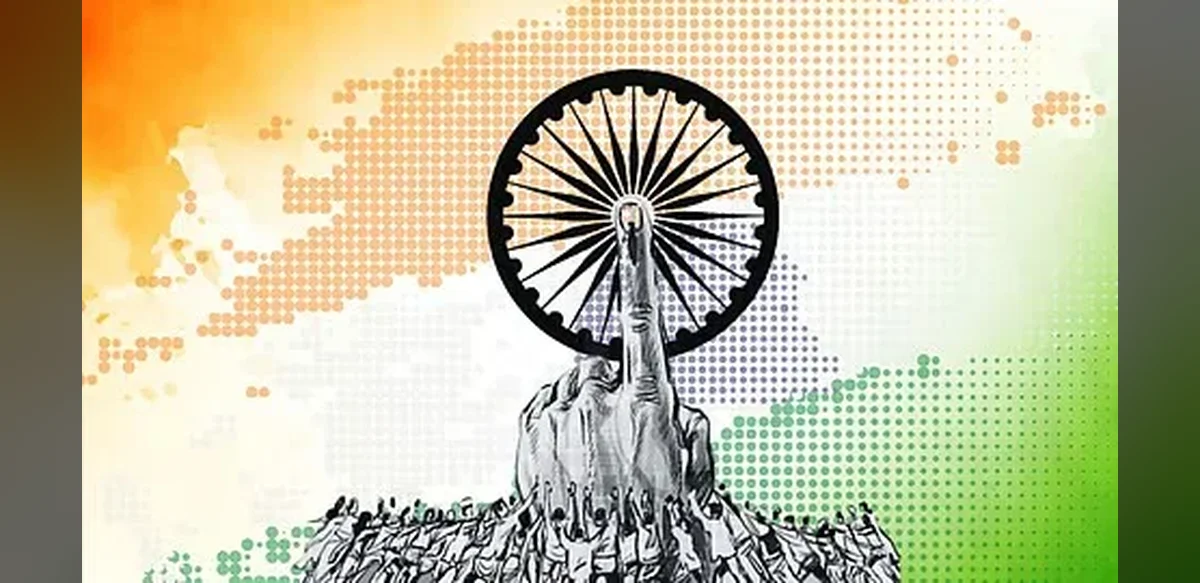
The One Nation One Election proposal is advancing, with steps accelerating toward holding Lok Sabha and state assembly polls together nationwide in 2029.
At a Lucknow press event, Joint Parliamentary Committee chairman and BJP MP P.P. Chaudhary described the plan as a key reform to boost governance efficiency, cut election spending and improve use of official resources.
He stated the goal is to align parliamentary and assembly elections by 2029 via required constitutional and legal changes.
The aim is simultaneous Lok Sabha and state assembly voting across India in 2029. Constitutional and legal amendments will enable this. It is not a party agenda but a broad reform tied to national interest, Chaudhary said.
Simultaneous polls were once standard. India held them together in the first four general elections of 1952, 1957, 1962 and 1967.
The pattern broke later due to early assembly dissolutions, President’s Rule in some states, new state formations and the Lok Sabha term extension during the Emergency.
Since the system worked earlier within India’s democratic and federal setup, worries about federalism compatibility lack basis, he argued.
If simultaneous polls from 1952 to 1967 did not harm democracy or federal structure, raising the issue now is only political debate, he added.
Supporters note India faces near-constant elections in various states year-round. Repeated Model Code of Conduct periods slow policy work and shift officials to poll duties.
Joint polls would lower costs, reduce administrative interruptions and let governments focus steadily on development.
Holding both elections together would save time, resources and public funds while improving governance, he said.
Chaudhary rejected fears that voters might struggle to separate national and state contests, noting Indian voters are informed and can decide independently at each level.
Multiple panels have backed the idea over four decades. The Election Commission suggested it in 1983, the Law Commission in 1999, the Constitution review body in 2002, a parliamentary panel in 2015 and NITI Aayog in 2018.
A high-level committee led by former President Ram Nath Kovind also endorsed synchronising Lok Sabha and assembly elections and outlined steps for local body polls in phases.
The Joint Parliamentary Committee is now consulting stakeholders nationwide. It has visited about ten states including Uttarakhand, Punjab, Haryana, Himachal Pradesh, Karnataka, Gujarat, Goa and Uttar Pradesh.
Views were gathered from chief ministers, former chief ministers, assembly speakers, parties, experts, lawyers and civil society groups.
The panel remains in consultation and has reached no final decisions. Its report will follow review of all input, Chaudhary said.
On logistics and EVM management, he expressed confidence in the Election Commission’s ability to conduct simultaneous polls.

