


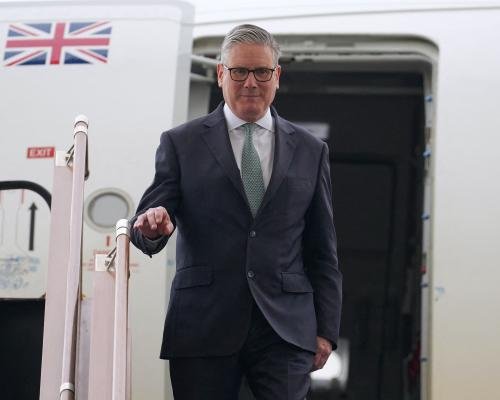
UK Prime Minister Keir Starmer, while on a trip to the Middle East, declared that Israel’s persistent strikes against Lebanon are unacceptable and need to end. He described the recent tensions with Iran as a critical turning point for strengthening Britain’s long-term security, advocating for a major overhaul that includes increased defense spending and deeper cooperation with European partners.
In a piece published in a major newspaper, Starmer outlined the need for the UK to build greater resilience in response to the situation. His stance on the Israeli actions mirrors remarks from Foreign Secretary Yvette Cooper and Defence Secretary John Healey, pointing to emerging differences between the UK and the United States under President Donald Trump regarding the Iran situation and its consequences.
Beyond criticizing the Lebanon strikes, Starmer and his team have firmly opposed any imposition of fees or charges on passage through the Strait of Hormuz. This comes after Trump suggested a collaborative arrangement between the US and Iran for managing the waterway. During his travels, which included discussions in Bahrain, Saudi Arabia, and the United Arab Emirates aimed at solidifying the fragile truce involving Iran, the US, and Israel, as well as restoring full access to the Strait for merchant vessels, Starmer addressed Israel’s heightened airstrikes in Lebanon that have resulted in over 250 fatalities.
In a television interview, Starmer emphasized, ‘This needs to end immediately. That’s my firm position.’ Although Israel has indicated it will engage in discussions with Lebanon, both Israel and the US have raised doubts about whether halting operations in Lebanon is covered by the truce. Trump’s Vice President JD Vance described it as a valid misinterpretation, but Starmer rejected this view, stating it’s not merely a technical matter but one of core principles.
British officials have avoided direct rebukes of Trump, even following his startling comment that Iran’s entire society could face destruction if it failed to comply with US conditions prior to the truce. In the same interview, Starmer indirectly critiqued the rhetoric, noting it did not align with British principles and values.
In his newspaper article, Starmer highlighted the UK’s distinct approach to the conflict, explaining that from the start, Britain chose not to participate in offensive operations. He portrayed these decisions as serving the nation’s best interests and fostering enduring stability. ‘This is why, in addition to avoiding involvement in the fighting, we have strengthened our connections with Europe and committed to the largest ongoing defense funding since the Cold War era,’ he wrote. ‘These steps go beyond addressing a single event; they represent a shift toward forward-thinking strategies.’
Starmer argued that previous global challenges, such as the UK’s exit from the EU, the pandemic, and the Ukraine invasion, led to temporary fixes. He vowed that the response to the Iran crisis would mark a definitive change, shaping the future for years to come.
During the interview, Starmer was direct about the importance of closer relations with the European Union, not only in security and defense but also in commerce and energy sectors, to bolster economic strength and durability. On the Strait of Hormuz, he insisted on unrestricted and secure transit without any costs.
Earlier that day, at a media briefing in London, Defence Secretary Healey cautioned against toll systems, warning they could set a dangerous precedent exploitable by others globally. He also denounced the increased violence in Lebanon and pushed for its inclusion in the truce to promote regional peace.
Later, in a speech at a London venue, Foreign Secretary Cooper stressed the necessity of preventing any resumption of hostilities post-truce, which Trump had declared earlier in the week. She emphasized support for ongoing talks, the inclusion of Lebanon in the agreement, the elimination of Iranian threats to nearby countries, and the complete restoration of the Strait of Hormuz.

