


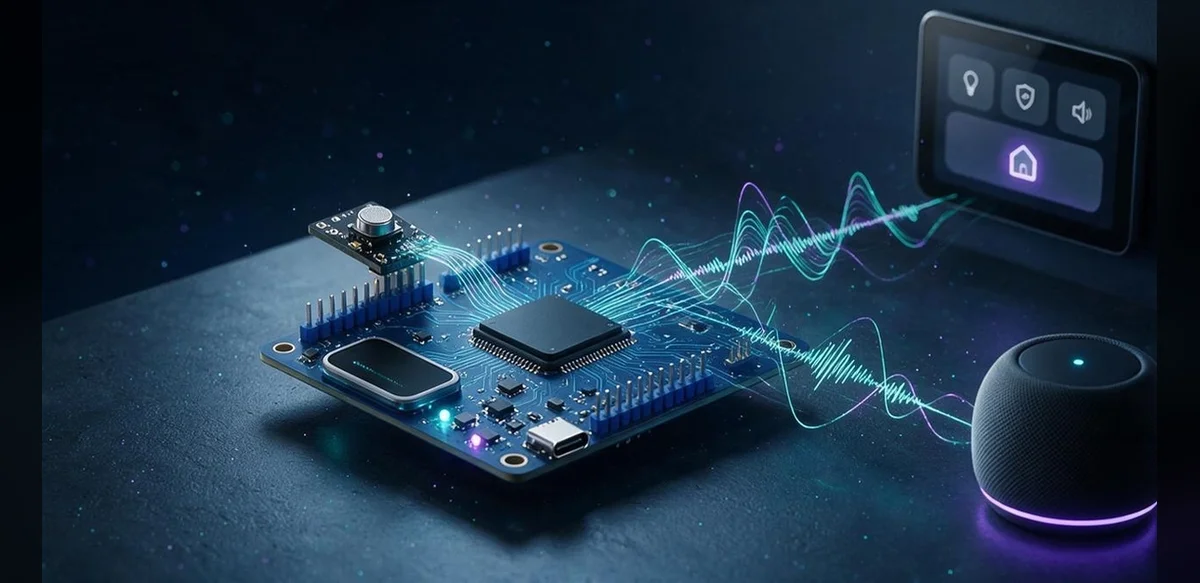
Engineers and hobbyists working with the ESP32-S3 microcontroller often seek to create compact voice-enabled devices for remote audio capture and processing. These setups, sometimes called voice satellites, rely on stable audio input and output chains to function effectively in real-world conditions.
The ESP32-S3 offers built-in support for digital audio interfaces that allow connection to various microphones and speakers. Two common approaches involve I2S for digital data transfer and PDM for direct microphone interfacing. Proper configuration of these interfaces forms the foundation of any reliable audio system.
I2S, or Inter-IC Sound, provides a standardized method for moving audio data between components. It uses separate clock and data lines to ensure synchronized transmission. When implementing I2S on the ESP32-S3, developers must select appropriate pins and configure sample rates that match the connected hardware. Common rates include 16 kHz or 48 kHz depending on the application needs.
PDM microphones, which output pulse density modulated signals, offer a simple wiring option with fewer pins required. The ESP32-S3 can decode these signals through its peripheral support. This approach reduces hardware complexity but demands careful handling of clock signals to avoid noise or distortion in the captured audio.
An effective audio pipeline begins with signal acquisition, moves through buffering and filtering stages, and ends with transmission or local processing. Interrupt handling and direct memory access play key roles in maintaining low latency. Without optimized buffering, audio dropouts can occur during continuous operation.
Power management also influences reliability. Voice satellites frequently run on battery or low-power supplies, requiring efficient use of the microcontroller’s sleep modes between audio events. Developers should test current draw during active listening periods to ensure the system meets design goals.
Software frameworks such as ESP-IDF provide example code for audio peripherals. These examples demonstrate basic setup but often require extension for production use. Adding error checking, automatic gain control, and noise suppression improves performance in varied acoustic environments.
Testing remains essential throughout development. Engineers typically use oscilloscopes to verify clock signals and audio analyzers to measure signal quality. Field trials in different rooms help identify issues like echo or interference that lab conditions may miss.
Integration with wireless protocols allows the voice satellite to send processed audio to a central hub. Secure data handling and low-bandwidth encoding become important when scaling to multiple devices. Latency targets usually stay under 100 milliseconds for natural conversation flow.
Documentation from component manufacturers supplies timing diagrams and recommended circuit layouts. Following these guidelines reduces the risk of hardware conflicts. Custom printed circuit boards can further stabilize connections compared to prototype wiring.
Community resources and open-source projects offer additional reference designs. Reviewing multiple implementations helps identify common pitfalls such as improper grounding or insufficient decoupling capacitors. These details often determine whether a prototype succeeds or requires revision.
Overall, constructing a dependable voice satellite with the ESP32-S3 centers on methodical configuration of audio interfaces, thorough testing, and attention to power and connectivity constraints. Consistent results emerge from iterative refinement rather than single-step assembly.


