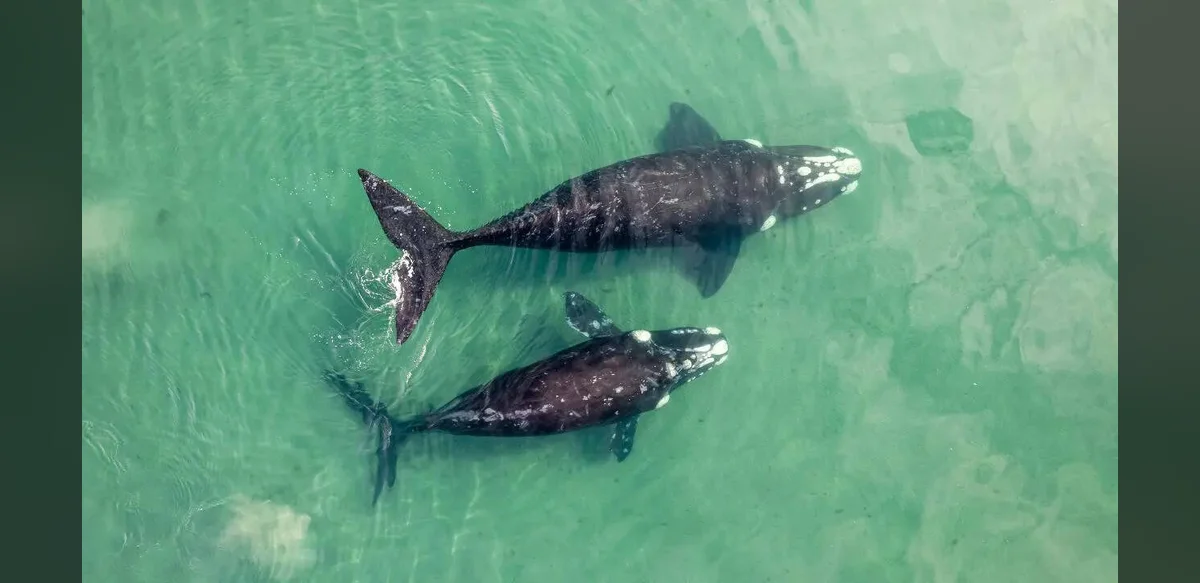
Researchers have identified an extensive concentration of whale remains on the seafloor within the Diamantina fracture zone in the southeastern Indian Ocean. The area spans roughly 1,200 kilometres and reaches depths of up to seven kilometres, featuring trenches, ridges and near-total darkness. Whale fossils and more recent carcasses appear in high density, some mineralised into rock while others still support deep-sea communities. Multiple expeditions recorded hundreds of such sites, revealing layered evidence of marine life across more than 5.3 million years. The study, published in Nature, documents skull fragments from extinct species alongside modern examples such as a minke whale carcass sustaining ongoing ecosystems. Organisms including worms, crustaceans and jellyfish cluster around nutrient-rich bones. Some specimens may represent previously unknown species. Experts note the find provides unique insight into long-term ocean evolution, though much of the zone remains unexplored due to extreme conditions.