


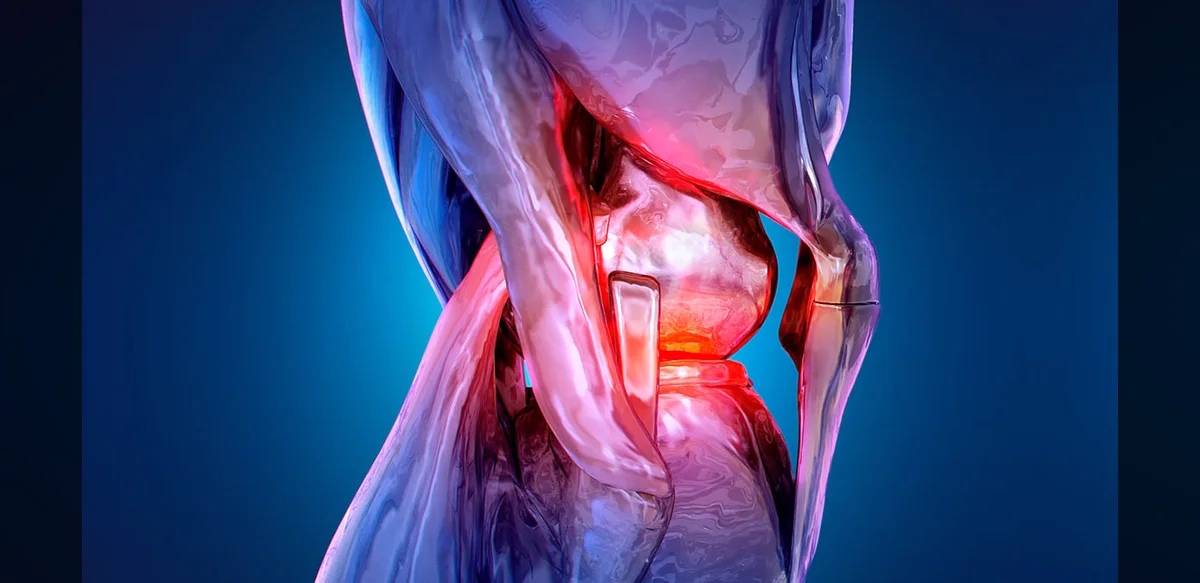
Knee osteoarthritis often causes severe pain and proves difficult to manage. It develops when protective cartilage around bones deteriorates, sometimes requiring surgery or replacement in advanced cases. As the most widespread arthritis type, it affects hundreds of millions globally.
Researchers from Charité – Universitätsmedizin Berlin in Germany have created a minimally invasive, safe, and effective new approach to address this issue. The method relies on genicular artery embolization, which blocks abnormal blood vessels and related pain-sensing nerves linked to the condition. Closing these vessels is intended to reduce nerve activity and ease discomfort.
The technique is not novel and has been applied for years, yet the blocking material tested in this observational study remains experimental. Earlier agents included antibiotics that could worsen inflammation or promote resistance. The team instead used tiny gel particles that slowly break down in the blood.
Radiologist Florian Nima Fleckenstein noted that the procedure targets excess blood vessel growth around the joint and adjusts the related nerve environment. Reducing inflammation and pain through these dissolving particles may represent the first method to change disease progression.
The particles are delivered via injection without extended preparation or hospital time. They limit flow only through the extra vessels and nerves tied to osteoarthritis while preserving overall knee circulation. The blockage lasts briefly as the particles dissolve within hours, yet it interrupts the inflammation and pain cycle.
Fleckenstein explained that embolizing the affected vessels restores normal structure in both blood vessels and nerves. In the group studied, pain decreased markedly while function in daily tasks, sports, and recreation rose, leading to clear quality-of-life gains.
The trial tracked 194 participants with an average age of 69 who had not improved with physiotherapy, anti-inflammatory drugs, or joint injections. Average pain scores fell from 7 to 3 out of 10 over 12 months. Measures of daily activity, recreation, symptoms, and quality of life all showed significant improvement, with no major side effects recorded.
Fleckenstein emphasized that the findings reflect real-world patients seen in routine practice. For suitable individuals, the single procedure can deliver sustained relief as an intermediate option before replacement surgery.
Although the study lacked a control group and drew participants from one center, consistent results across cases support further investigation. Larger, longer trials and randomized comparisons are planned.
The work appears in Radiology. It was verified by Jess Cockerill and edited by Michelle Starr.

