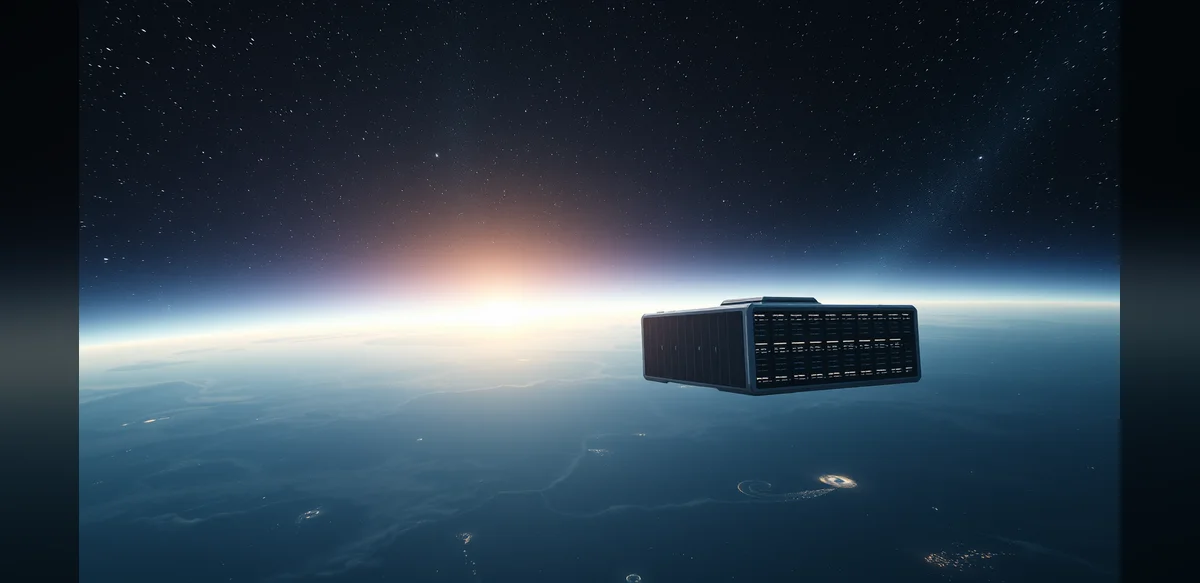
Artificial intelligence is creating huge demand for computing resources. Data centers supporting advanced AI systems now struggle to keep vast numbers of processors at safe temperatures while using large quantities of power and water. On Earth, cooling equipment often uses a major portion of electricity and millions of liters of water annually through evaporation systems. In orbit the situation changes completely. Without air or water, engineers depend on radiator panels that emit excess heat as infrared radiation into the vacuum. This approach has led scientists to consider whether placing facilities in space might reduce environmental strain from AI operations. Cooling servers on the ground remains difficult because high-performance chips produce intense heat that can harm equipment if not removed quickly. Government data show data centers consume far more energy per area than standard offices and together use about two percent of U.S. electricity. Many sites also draw millions of liters of water yearly, stressing local supplies. Space removes several problems at once by eliminating air, cooling towers, and evaporative water needs. Spacecraft instead move heat through coolant loops to radiator surfaces that radiate it away, the sole method available in vacuum conditions. Although this avoids water use, the panels require precise design for size, angle, and coatings to work efficiently. Growing AI models are prompting companies to examine orbital sites that could draw on steady solar energy and avoid terrestrial resource limits. Yet challenges persist, including high launch expenses, limited repair options, and the fact that all computing power still turns into heat that radiators must handle. Current technology makes such facilities experimental rather than operational, but progress in reusable rockets and satellite production may change that. If obstacles are solved, space could host some of the most demanding AI workloads in the future. The spread of artificial intelligence continues to alter data center design, with denser processor clusters forcing a shift from air cooling toward advanced liquid systems that move heat more effectively.