


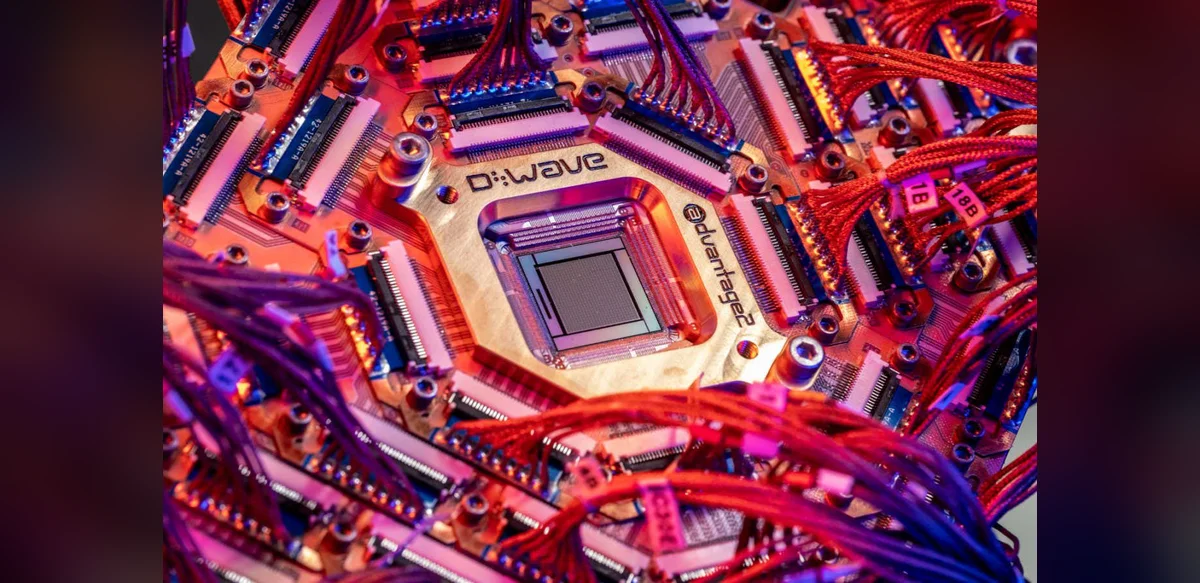
A superconducting quantum computer is participating in a network that mines an experimental cryptocurrency named Quip. It performs the task faster and with improved energy efficiency compared to traditional systems.
Researchers report that a quantum computer has successfully mined cryptocurrency for the first time in such an experiment, while consuming significantly less energy.
Cryptocurrencies and quantum computing intersect in notable areas. A sufficiently advanced quantum machine could potentially compromise the encryption protecting digital currencies. Multiple studies also indicate that quantum systems might reduce the high energy demands of cryptocurrency operations.
To examine this concept, Colton Dillion of Postquant Labs and his team launched Quip, an experimental blockchain network active since April. Blockchain functions as a public ledger where participants compete to solve a proof-of-work calculation to add new records. Successful miners receive coins, and the added block finalizes the transaction.
Quip’s proof-of-work task involves an optimization problem similar to scheduling deliveries or building investment portfolios. Although most network participants use conventional computers, an Advantage2 system from D-Wave Quantum is included and appears to outperform them.
The challenge is designed to test both classical and quantum devices without being impossible for either, allowing quantum technology a meaningful opportunity to demonstrate impact, according to Carlos Perez-Delgado of the University of Kent.
D-Wave quantum computers have faced discussion regarding their performance. In 2024 the company reported solving a problem beyond conventional supercomputers, yet another group later achieved similar results on a standard laptop.
Dillion notes that Quip’s decentralized structure allows independent verification. Skeptics can join the network and test the outcomes themselves.
During a June investor presentation, D-Wave CEO Alan Baratz stated that Advantage2 is available to Quip for roughly five minutes daily. It therefore competes for about one-third of new blocks yet wins 92 percent of them, indicating an advantage for this specific problem.
Baratz also reported that Advantage2 uses substantially less energy. Detailed studies have not been released publicly. He described quantum computing as energy-efficient for difficult problems.
Early Quip data supports this view. Dillion indicates that Advantage2 requires about 100 times less power on average—12.5 watts versus 1334 watts—to win a block. A conventional machine matching its success rate would need roughly 300 times more power. The network was also designed to resist attacks from quantum adversaries.
Whether networks like Quip point to a safer and more sustainable blockchain future remains uncertain, says Olivier Ezratty of the Quantum Energy Initiative. Although quantum machines may lower energy use per calculation, the expense of building and operating such hardware complicates economic arguments for large-scale adoption.
Perez-Delgado is more positive, expecting greater use of the technology due to incentives for faster and cleaner mining. Other companies are also exploring quantum proof-of-work approaches.

