


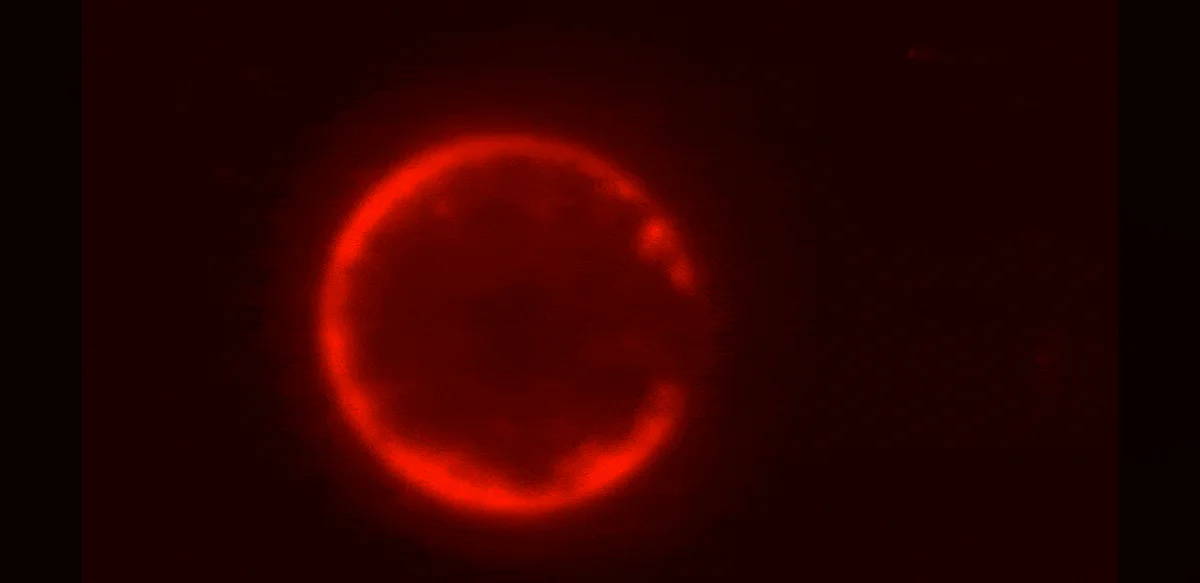
Researchers at the University of Minnesota report creating the first synthetic cell constructed completely from non-living components that completed a full cycle including growth and division. Synthetic biologist Kate Adamala, a project co-lead, described it as the most exciting work she has undertaken. The team says the achievement demonstrates that core life processes such as replication can occur through chemical means alone without any unknown vital force.
The system, named SpudCell, contains a genome of 90 kilobase pairs, far smaller than the roughly three billion base pairs in the human genome and below the previously estimated minimum of 113 kilobase pairs thought necessary for cellular function. The findings remain unpublished and unpeer-reviewed.
Each SpudCell consists of a lipid sphere resembling a cell membrane that encloses seven plasmids carrying the genetic material. An internal protein-production mechanism allows the structure to convert absorbed nutrients into new components and to divide. Reported capabilities include genome copying, growth, nutrient uptake, and genetically directed division.
The artificial cells cannot sustain themselves across multiple generations or evolve, and they depend on external substances for their protein machinery and metabolic control. They also lack internal structural support found in natural cells.
Scientists note that such constructs could eventually serve as controlled biological factories for producing medicines or other materials, potentially offering advantages over current genetically modified organisms. A preprint describing the work is available on the website of the nonprofit Biotic, which Adamala helped establish.

