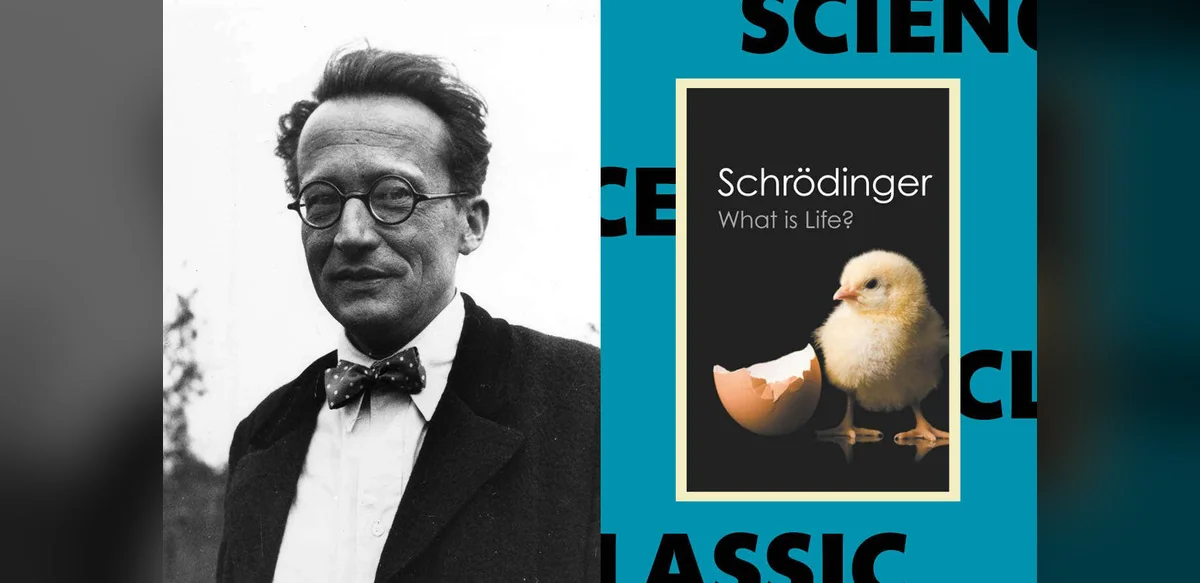
Erwin Schrödinger, a founder of quantum mechanics, explored living systems in his 1944 work What Is Life?, one of the most notable popular science volumes of the twentieth century. The physicist, known for his work on atoms, chose to examine organisms instead. Drawing from 1943 Dublin lectures, the concise and accessible text poses a core question in physical terms: how can physics and chemistry explain events inside a living organism’s boundaries? Schrödinger analyzed atoms as tiny building blocks obeying statistical laws, noting that large collections allow average predictions but not precise details on individuals. He observed that physical systems tend toward disorder, yet organisms maintain order like clockwork mechanisms and reliably transmit traits via a small hereditary substance. Before DNA’s structure was known, he linked mutation studies to quantum concepts and suggested organisms require negative entropy by drawing order from surroundings. He proposed that new physical laws might be needed for full understanding. The book inspired many physicists to enter biology and remains widely read, though some biologists and chemists found gaps. Max Perutz noted overlooked contemporary enzyme research, while later analyses highlighted missed connections between entropy and information. Even so, the text continues to resonate with biophysicists discussing equilibrium, disorder, and potential new laws for living matter.